
A home battery installation starts with a survey, not a battery order. The installer checks your electricity use, existing inverter, wiring, location and grid connection. They then agree the design, handle any network application, fit and test the system, and show you how it works. Keep the electrical certificate, network evidence and warranty details after handover.
I run a Sunsynk inverter and Fogstar battery at home. My experience has taught me that the settings and paperwork matter after the unit is fixed to the wall. This guide shows what to ask an installer for, and when. It covers a fixed, grid-connected UK home battery, with or without solar.
What should the survey and quote settle?
Give the installer recent electricity bills and, if you have solar, its inverter model and existing DNO documents. Tell them whether you want evening use, cheap-rate charging, backup during a power cut, or future solar. Those are different designs. A battery sized only from its nameplate capacity can miss how much energy you use after sunset and how much power your appliances draw at once.
The survey should check the consumer unit, meter position, earthing, cable route, mounting surface and internet connection. It should also identify any work needed for backup circuits. Ask for a written design with usable battery capacity, continuous inverter output, the proposed location, and the exact equipment models. The battery location guide covers fire separation and siting rules in detail.
| Decision | What the written quote should state | Your check |
|---|---|---|
| Capacity and power | Usable kWh and continuous kW, not only a product name | Will it cover the hours and loads you care about? |
| Connection | Existing inverter retained, replaced, or joined by a separate battery inverter | Does the design work with your existing solar and export agreement? |
| Location and wiring | Exact wall or room, cable route, consumer-unit changes and fire measures | Can you see where extra labour or building work enters the price? |
| Grid and backup | G98 or G99 route, export limit if used, and named backup circuits | Who applies, and what can run when the grid fails? |
| Handover | Testing, app setup, certificates, DNO evidence and warranty registration | Who supplies each document, and by what date? |
If you may expand later, ask whether the inverter and battery can accept another module. Compatibility depends on the exact model, firmware and battery controls. The battery expansion guide explains those checks. Do not pay for future capacity based on a vague promise that more batteries can always be added.
AC or DC coupling: what changes in a retrofit?
A battery stores direct current, while a house uses alternating current. With AC coupling, a separate battery inverter connects on the house AC side. That can leave an existing solar inverter in place. Enphase describes its IQ Battery 5P as an AC-coupled system for new and retrofit solar. The installer still has to confirm metering, compatibility and DNO capacity.
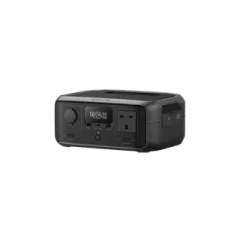
Want backup power for a power cut without an electrician? Compare EcoFlow portable power stations (affiliate link).
With DC coupling, panels and battery work through a compatible hybrid inverter. This can suit a new solar and battery system, or a retrofit that also replaces the old solar inverter. Tesla describes Powerwall 3 as an integrated solar inverter that can also join existing solar or run alone. The battery overview explains sizing and types. Your quote should name which existing equipment stays and which equipment changes.
Ask specifically about backup. A battery that works while the grid is healthy does not automatically power the house during an outage. Backup needs a suitable inverter, changeover equipment and a defined circuit or whole-home design. The power-cut guide covers that choice.
How much does home battery installation cost?
For a useful price check, compare complete installed prices, not battery list prices. In September 2026 I checked Octopus Energy’s battery-only installation page. It starts at £3,947 for a 5 kWh battery, £5,336 for a 10 kWh battery and £7,999 for a 13.5 kWh Tesla Powerwall 3. These are starting prices from one large installer. Your survey can raise them. Only the Powerwall 3 option includes backup during a power cut as standard.
Labour is not one fixed add-on. A long cable run, consumer-unit upgrade, wall or floor preparation, extra fire measures, a backup sub-board or export-limiting equipment all add work. A simple battery added during a planned solar installation can share site work. A retrofit may need a second inverter or a replacement hybrid inverter. Ask for those items separately on the quote, including VAT, commissioning and any return visit.
The installed price says nothing about payback on its own. Your tariff, usable cycles and export terms decide that. Use the battery without solar guide if you are asking whether grid charging is worth its cost.
Who handles DNO approval, MCS and building control?
A grid-connected battery can export through its inverter, so the installer must assess the whole generating arrangement. Under ENA G98, fully type-tested equipment at no more than 16 A per phase can normally connect first. The installer then notifies the Distribution Network Operator, or DNO, within 28 days of commissioning. That is 3.68 kW on a single 230 V phase. If the combined arrangement exceeds the G98 boundary, G99 approval is normally needed before connection. Existing solar and a separate AC battery can change the aggregate figure.
Make the installer name the G98 or G99 route in the quote. An export limit may form part of the design, but do not assume it removes the need for a DNO application. The DNO confirms the accepted connection. Our DNO guide explains the forms and evidence.
MCS is a certification scheme, not the electrical certificate or the DNO. An MCS-certified battery installer works to the MCS battery standard, MIS 3012, and can issue an MCS certificate for that installation. Ask which technology the company is certified for. Ofgem accepts MCS or equivalent evidence for eligible solar generation under the Smart Export Guarantee, or SEG. A battery alone is not eligible generation. If you already receive SEG payments, ask your supplier how it will measure eligible solar export after the battery is fitted.
VAT is a separate question. HMRC zero-rates qualifying business-supplied and installed home batteries, including standalone and retrofit systems, until 31 March 2027. A battery bought as goods alone stays standard-rated. HMRC does not make MCS certification a condition of this VAT relief. The battery VAT guide explains the supply-and-fit boundary. Check the VAT line on your written quote.
The electrical work needs inspection, testing and an Electrical Installation Certificate for the new installation. In England, a new circuit or consumer-unit replacement also needs a Building Regulations notification route. A registered competent person can self-certify relevant work and arrange the compliance certificate. Other UK nations have different building-control rules. Ask the installer which rule applies to your address, who notifies the authority, and what record you will receive.
What happens on installation day?
Before the visit, clear the agreed mounting area and cable route. Keep the meter and consumer unit accessible. Make sure the installer can reach your internet connection if the product needs an app. Confirm the planned power interruption and any essential equipment that cannot lose supply. Most straightforward installs take one day on site. Your power will be off for part of that day while the installer connects the battery. Ask how long the interruption will last.
The team should check the final position against the design, mount the equipment, run protected cables and fit the required isolators and electrical protection. They may add meters, current sensors or a backup board. They then label the equipment and test the fixed wiring before energising it. Do not accept an unagreed location change because it shortens the cable run. The revised position still needs to meet the manufacturer instructions and the fire-safety design.
If the survey found a consumer-unit problem, unsafe earthing or unsuitable mounting surface, the installer may need extra work before connection. That is why a clear survey matters. Ask the company to explain any change and its price before work continues.
What should commissioning and handover prove?
Commissioning is more than seeing the app turn green. The installer should demonstrate that the battery charges, discharges, measures house demand correctly and obeys its export limit. MCS MIS 3012 calls for functional checks of controls, alarms and relevant communication. Ask to see the system respond to a change in load. If you paid for backup, ask for a supervised outage test or a documented reason it cannot be done that day.
I change my own Sunsynk settings, so I know how easily a schedule can change the result. Ask the installer to show your initial charge window, minimum reserve, maximum charge and discharge power, export setting, and who can change them later. Confirm the time zone and tariff schedule in the app. Take a screenshot of the agreed settings. Check that the monitoring account belongs to you, not only to the installer.
Do not sign a handover sheet that says backup works if nobody has shown the backed-up circuits. Also ask who receives fault alerts, what the alarm means, and how you isolate the system in an emergency. Keep the manual beside the electrical documents, not in an installer-only app.
Which documents should I keep?
- Electrical Installation Certificate: the test and inspection record for the fixed electrical work. Ask for the circuit details and test results.
- DNO evidence: the G98 notification and acknowledgement, or the G99 approval and final commissioning submission, as applicable.
- MCS certificate and handover pack: when an MCS-certified installer supplies the system. Keep the system design, commissioning record and manuals.
- Building Regulations compliance certificate: when your work is notifiable and the installer uses a competent person scheme. Keep the alternative building-control record if that route applies.
- Warranty and support details: product serial numbers, registration confirmation, installation warranty, service contact and any maintenance conditions.
- Final settings and diagram: a simple system schematic, export and backup settings, app ownership, and any password transfer.
Some records arrive after installation day. The MCS Customer Commitment gives an MCS installer up to 30 calendar days for its certificate, required Building Regulations certificate and DNO proof. The government says a competent person scheme should provide the Building Regulations certificate within eight weeks. Agree dates in writing, then follow up on missing documents. Keep the pack for your insurer, future installer and any home sale.
How long does it take, and which quotes should you question?
The on-site work may take a day for a straightforward system, but the full process starts with design and network checks. A G98 job has a post-commissioning DNO notification. A G99 job needs approval before connection, so its date depends on the DNO decision and any network conditions. Stock, survey findings and building work can also move the date. Ask for a schedule with the survey, DNO decision, installation and document delivery as separate milestones.
Question a quote that gives only a battery model and a total price. You should also question one that promises backup without naming circuits, assumes your existing inverter is compatible, ignores the DNO, or leaves certification vague. A blanket claim that MCS is legally required for every battery or for 0% VAT is wrong. Ask who signs the electrical certificate, who registers warranties, and who fixes a fault after handover.
Can I install a home battery myself?
You can research models, compare quotes and learn to run the finished system. Fixed wiring, protection, testing and network paperwork need a competent plan and the correct sign-off route. I cover the owner-supplied and hands-on options in DIY home battery UK. Agree the professional boundary before buying equipment.
The next move
Take your last year of bills, existing solar documents and a list of loads to each survey. Use the quote table above to compare designs. Before paying the balance, test the agreed functions and collect a dated list of outstanding documents. That gives you a working battery and a record someone else can understand later.
Sources
- Energy Networks Association, G98, for the 16 A boundary and notification route.
- MCS, MIS 3012:2025 and MCS Customer Commitment, for commissioning and handover.
- Ofgem, SEG annual report and co-location guidance, for certification and battery export.
- HMRC, VAT Notice 708/6, for battery installation relief.
- GOV.UK, Approved Document P and competent person scheme guidance, for England.
- Enphase, IQ Battery 5P and Tesla, Powerwall design, for coupling examples.
- Octopus Energy, battery-only installation, for installed starting prices checked September 2026.
