
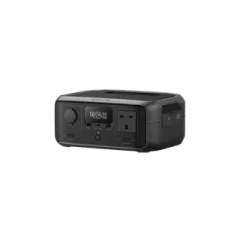
I run a 15 kWh Fogstar rack battery on a Sunsynk inverter, and I sourced, sized and now operate it myself. What I could not do myself was connect it: fixed wiring, protection design, testing, certification and the grid paperwork all needed a qualified installer.
That split is the useful meaning of DIY here. Doing parts yourself can save money and give you more control, but signing off work you cannot design or test does not remove the risk. It just leaves it with you.
What can you actually do yourself?
You can research, size, source and configure a battery system, and a technically competent owner may assemble some 48 V battery-side equipment. You should plan for a qualified installer to design and connect fixed wiring, specify protection, test the installation, certify notifiable work where required and complete the DNO process for the whole grid-connected system.
The boundary is not determined by whether a battery is called 48 V, modular or DIY-friendly. Once the battery works through a grid-parallel inverter, the inverter and fixed AC installation affect the house, the public network and anyone who later works on either.
Who is responsible for each part?
| Part of the project | Useful owner role | Who must accept responsibility |
|---|---|---|
| Consumption, capacity and backup priorities | Provide bills, interval data and a clear list of essential loads | Owner, checked by the system designer |
| Battery and inverter compatibility | Research exact models, protocols and warranty conditions | Designer and installer of the complete system |
| Siting and physical access | Offer realistic locations and disclose escape routes, heat and weather exposure | Designer and installer against current safety requirements |
| Fixed wiring and protection | Agree routes and future needs | Competent electrical designer and installer |
| Testing and certification | Keep every certificate and setting schedule | Person or body using the accepted compliance process |
| DNO notification or application | Provide supply and existing-generation details | Installer or applicant named in the network process |
| Monitoring and automation | Configure schedules, dashboards and alerts after commissioning | Owner, within documented operating limits |
Building Control and the DNO are not substitute installers. They each deal with a different part of the outcome. The manufacturer is not responsible for a pairing it has not approved. An electrician may be competent in domestic wiring without being willing to commission unfamiliar owner-supplied battery equipment. Settle those boundaries before ordering anything heavy or expensive.
How much DIY do you want to take on?
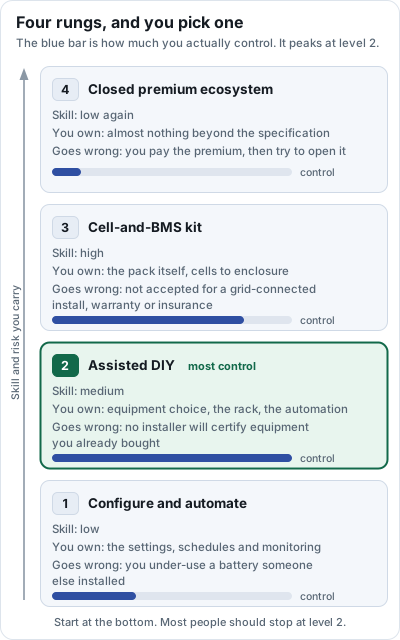
1. Configure and automate an installed system
This is the lowest-risk route. An installer supplies and commissions the battery, while you learn the tariff schedule, reserve settings, charge limits, monitoring and local automation. It is still meaningful DIY because how you run the battery decides how much it actually saves. My home battery installation guide shows what that installer-led job should include, step by step.
2. Source an open battery and use assisted DIY
You select a documented battery-inverter combination, agree the design with the professional who will connect it, and may build the rack or prepare non-electrical parts. The installer specifies the final protection, wiring, settings, siting, testing and network route. This is where Fogstar, Pylontech and other 48 V systems can offer owner control.
3. Assemble a cell-and-BMS kit
A kit adds cell handling, compression, busbars, torque, fusing, BMS configuration, enclosure performance and fault diagnosis to the project. It may suit an experienced off-grid builder or a controlled workshop project. Do not assume a completed kit will be accepted for a domestic grid-connected installation, warranty, insurance or an installer’s certification route.
4. Buy a closed premium ecosystem
Tesla, Enphase and similar systems concentrate value in integration, approved commissioning, monitoring, backup controls and one support chain. Treat them as installed products. Trying to separate the hardware from that route usually removes the reason for paying the premium.
Which battery jobs should you do yourself?
| Level | Typical tasks | What to check |
|---|---|---|
| Green | Read interval data, calculate capacity, compare documents, plan dashboards, keep records | Your assumptions still need checking against the final design |
| Amber | Source equipment, assemble a rack, route communications, configure monitoring, prepare a location | Do only what the responsible installer and manufacturer accept in writing |
| Red | Design protection, alter the consumer unit, connect fixed AC wiring, commission island mode, energise before network acceptance | Use the qualified and notified process required for the work |
A common mistake is buying the battery first and searching for an electrician later. Many electricians will not take design or certification responsibility for a system they did not specify, particularly when the inverter firmware, battery protocol or backup arrangement is unfamiliar.
What does assisted DIY look like with Fogstar and Sunsynk?
I bought my older Fogstar 15 kWh rack bundle in May 2023. I initially used two 5.12 kWh packs and added the third in May 2024. The batteries communicate with a Sunsynk inverter, and I use Solar Assistant to monitor the system and automate charging.
The owner-controlled part is real. I can see individual BMS readings, change tariff schedules and use rules to stop overnight household demand interfering with charging and balancing. When the third pack was added, its state of charge drifted from the original pair and then converged after repeated full charges. That is the kind of behaviour a closed app may hide.
The responsibility is also real. Solar Assistant reports the wrong capacity register for these packs, so I use the battery LCD readings for the ownership record. Firmware updates reset cycle counters, which means I cannot give a precise lifetime cycle total. Open access gives you more information, but you still have to decide which information is trustworthy.
None of that turns the fixed installation into casual DIY. The inverter, battery cables, DC protection, metering, AC circuit, consumer-unit connection, export settings and any backup output form one designed system. For me, the control has been worth it. It is not proof that every Fogstar and Sunsynk pairing, firmware version or installation route will behave the same way.
Should you DIY a Tesla or another premium battery?
Generally, no. Choose a premium battery because you want the integrated installation and support chain, then hold the installer accountable for delivering it. Tesla routes Powerwall through certified installers. Enphase requires its certification to commission the IQ Battery 5P. Their gateways, controllers, apps and warranty records are parts of the product, not optional accessories around the battery.
You can still own the specification. Ask for the exact usable capacity, continuous output, backup circuits, transfer equipment, network setting, API access and warranty document. That is a better use of DIY effort than trying to obtain commissioning access for a closed system.
If you want to choose each component, run local automation and replace parts independently, buy an architecture designed around those priorities. Paying for a closed ecosystem and then trying to open it is an expensive compromise.
Which rules and commercial consequences apply?
BS 7671 and battery safety
BS 7671 Amendment 4 was published on 15 April 2026. It adds requirements for stationary secondary batteries, power-conversion equipment, bidirectional and hybrid inverters, and protection where power can flow in both directions. The previous edition remains in transition until 15 October 2026, but a new installation should be designed around the current safety baseline. Source: IET and BSI publication notice.
PAS 63100 covers fire-safe installation and siting of domestic battery systems. Do not reduce it to one internet rule about garages, lofts or distance from a door. The designer needs the current standard, the manufacturer’s instructions and the actual room, escape route, temperature and access conditions.
Building Regulations
In England, Part P applies to electrical work in dwellings, and adding a new circuit or replacing a consumer unit is notifiable work. Compliance can use a registered competent-person route, Building Control or an applicable third-party certification route. That does not support the blanket claim that DIY is illegal. It means the completed work needs an accepted compliance route. Scotland, Wales and Northern Ireland have different building-control systems. Source: Approved Document P.
DNO notification or approval
A grid-parallel battery is treated as generating equipment for network purposes. The installer must establish whether G98 notification after commissioning or G99 approval before connection applies to the complete arrangement. Battery capacity alone does not decide this. The inverter, aggregate generation, export capability and configured limits all matter.
MCS and SEG
MCS is not the same thing as the law. It is a certification and consumer-protection route used by installers and commonly used as evidence for Smart Export Guarantee applications. Government policy allows suppliers to accept an equivalent certification route, so it is also too broad to say a DIY system can never receive SEG. Ask the intended supplier what evidence it will accept before choosing the installation route.
VAT
Installed residential batteries can qualify for zero-rate VAT in the specified circumstances until 31 March 2027. Buying hardware yourself and paying separate labour does not automatically receive the same treatment. Compare the complete after-tax cost of owner-supplied and installer-supplied routes before assuming the online battery price is cheaper.
Warranty and insurance
A technically compatible CAN protocol does not prove that both manufacturers support the pairing. Get the supported inverter list, required firmware, installer conditions and warranty responsibility in writing. Tell the home insurer what is being installed and where. A compliant electrical certificate does not force an insurer or manufacturer to accept a risk it excluded in its own terms.
What should you check before buying a battery?
- Find an installer who will review the proposed equipment before you order it.
- Get written confirmation that the exact battery, inverter and firmware combination is supported.
- Agree who designs the protection, isolation, earthing and backup arrangement.
- Confirm the proposed location against current battery-siting requirements and manufacturer instructions.
- Establish the G98 or G99 route for the complete site.
- Compare VAT on the whole job priced both ways, owner-supplied and installer-supplied.
- Read the battery and inverter warranties for installer, internet, registration and pairing conditions.
- Ask the insurer what documents it wants.
- Do not energise anything until the electrician who signs the certificate has tested and accepted the system.
When should you stop and involve a professional?
- You cannot find an electrician or installer willing to accept the proposed equipment before purchase.
- The two manufacturers do not list or confirm the exact pairing.
- The job changes the consumer unit, adds a fixed circuit or introduces an islanded backup supply.
- You cannot explain the DC fault protection, isolation, cable rating or earthing arrangement.
- The proposed location is on an escape route, overheats, floods or conflicts with the current siting assessment.
- You do not know whether network approval is required before energisation.
- A seller says compatibility, certification or warranty is somebody else’s problem.
DIY home battery FAQs
Is a DIY home battery legal in the UK?
Yes, parts of the work can legally be done by the owner; no blanket UK rule bans it. The fixed installation must comply with the electrical, building-control and network requirements that apply in the relevant nation, and the people signing the work must be willing and competent to take responsibility for it.
Do I legally need an MCS installer?
MCS is not a universal legal requirement for owning a battery. It can affect the installation route, consumer protection, warranty expectations and the evidence an electricity supplier accepts for export payments. Work out exactly what you would give up, especially export payments, before you commit to a non-MCS route.
Does DIY battery installation save money?
Owner sourcing can reduce the hardware margin, but it does not remove the cost of a compliant working system. Add the inverter, protection, cabling, metering, design, electrical work, testing, DNO process, VAT and the value of one company standing behind the whole installation.
On the hardware itself, the saving is real and it is measurable at one brand. Fogstar Energy publishes its own prices, and on 24 July 2026 its rack batteries worked out at £109 to £121 per usable kWh depending on the size of the bundle. That is the number I would plan around, because I can check it. Pylontech sits near £189 per kWh, but that figure is reseller-reported rather than published by Pylontech. For most other brands sold here I could not find a first-party UK price at all, and an installed premium system is quoted as a whole job rather than per kWh, so the two are not comparable line by line. Where I cannot source a price I would rather say so than print one.
Is a portable power station a DIY home battery?
No. A portable power station can run selected plug-in loads, but it is a different product class from a fixed grid-parallel home battery. Do not connect a portable unit to fixed household wiring through an improvised lead or changeover arrangement.
The useful DIY question is not whether you can touch the project. It is which responsibilities you want to own and which named professional will own the rest. Set that out on one page before buying the battery, and the project becomes much easier to control.
