
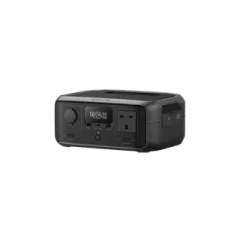
You can buy a sodium-ion home battery in the UK today, but you probably should not yet. One credible product exists (Eleven Energy’s, at roughly £304 per kWh of hardware), which is two to three times the price of a mainstream LiFePO4 rack. Sodium’s famous cold-weather edge barely matters in a UK winter. If you want storage now, LiFePO4 is the rational buy; the case for waiting is narrower than the headlines suggest.
I have not installed a sodium battery. What follows is the state of the market as I found it on 22 July 2026: what is genuinely on sale in Britain, what the loud announcements actually cover, and the numbers that decide the wait-or-buy question.
Can you actually buy a sodium-ion home battery in the UK?
Yes, one: Eleven Energy, a UK company that launched what it calls the UK’s first sodium-ion home battery in July 2025. Its Volta 4.5 kWh module sells through mainstream renewables distributors (Midsummer, Solar Trading UK, Cambridge Renewables, Quality Heating), and a newer stackable range called Galvani carries a 10-year product warranty and an 8,000-cycle guarantee. This is real UK retail stock, not a pre-order page.
Two honest gaps in Eleven’s public material: it does not name its cell supplier, and its launch material says “grid-compliant” without naming G98 or MCS certification. Check the datasheet and the certification paperwork before you order, the same as you would for any battery.
Everything else making sodium headlines is not a home product. Sorting that out is half the value of this article:
| The headline | What it actually is | For your house? |
|---|---|---|
| CATL Naxtra: 175 Wh/kg, 10,000+ cycles, 90% power at -40°C | An EV and general-purpose cell; reported in mass production since late 2025 | No home-storage product announced |
| CATL TENER Sodium: 15,000 cycles, deliveries September 2026 | A 30 MWh grid-scale container, China deliveries first, international from June 2027 | No |
| BYD and HiNa sodium cells | China-market stationary storage and micro-EVs; residential still in development | Not in the UK |
| Natron Energy | US sodium firm for data centres; ceased operations September 2025 | No |
| Eleven Energy Volta / Galvani | UK home battery modules, on sale through UK distributors | Yes, the one real option |
How does the price compare with LiFePO4?
This is the deciding fact. Eleven’s Volta 4.5 kWh retails at £1,370 including VAT, which is about £304 per usable kWh of hardware. A Fogstar 16.1 kWh LiFePO4 rack battery, the benchmark for UK DIY storage, works out at roughly £109-137 per kWh. At today’s prices you pay two to three times more per stored kWh to own the newer chemistry.
The promised sodium cost advantage is real in principle (sodium is abundant and needs no lithium, cobalt or copper anode foil) but it depends on Chinese gigafactory scale-up feeding through to UK retail. Commentary puts that crossover around 18-24 months away; treat that as an estimate from secondary sources, not a shipping price. Batteries you can order today do not carry it.
What is sodium-ion actually better at?
Two advantages hold up under the marketing. First, transport and storage safety: a sodium cell can be fully discharged to zero volts and shipped or stored completely flat, which removes the short-circuit thermal-runaway risk while it stays in that state. Lithium cells cannot be taken to true zero safely. Second, cold performance: sodium cells broadly keep around 90% of capacity near -20°C, where an unheated LiFePO4 pack loses a large fraction and cannot safely charge below freezing.
Now the UK reality check. British winters rarely reach the temperatures where sodium’s cold edge becomes decisive, and current UK LiFePO4 packs increasingly ship with built-in heaters that keep them charging safely below freezing anyway. For a battery mounted in a garage in Surrey rather than a cabin in Lapland, the cold advantage is close to irrelevant.
On cycle life, be careful with the numbers. The 10,000 and 15,000-cycle figures belong to CATL’s EV and grid cells under lab conditions, not to anything you can bolt to your wall. The relevant domestic number is Eleven’s 8,000-cycle guarantee on Galvani, and unlike the CATL figures it is a warranty. Before treating it as a win, compare it against your LFP quote’s full terms on the same basis: retained capacity, throughput caps and depth-of-discharge conditions, not the headline cycle count.
Can you drop sodium cells into an existing LFP setup?
No, and this is the trap for DIY builders. A sodium cell swings from about 1.5V empty to about 3.9-4.0V full, a far wider window than LiFePO4’s 2.5-3.65V. An LFP-configured BMS or inverter window will strand a chunk of sodium’s capacity, and a sodium pack’s voltage range can fall outside what a standard 48V LFP inverter expects entirely.
A working sodium system therefore needs a sodium-aware BMS and an inverter with a wide enough voltage window, which in practice means a vendor-matched pairing (Eleven sells its own hybrid inverters alongside the batteries). If your plan was to slot sodium cells into an existing rack next to your current inverter, that plan does not survive contact with the datasheets.
Should you wait for sodium, or buy LiFePO4 now?
Buy LiFePO4 now if you want storage working for you this winter. It is cheaper per kWh by a wide margin, denser, supported by every mainstream inverter, and the heated UK packs have already answered the cold-weather objection. If a battery already pencils out for your tariff and consumption, every month of waiting defers savings you could have been banking; run that calculation rather than assuming it.
The VAT clock matters to both chemistries equally: the 0% VAT rate on installed home battery storage runs until 31 March 2027, after which it reverts to 5%. Waiting past the window means paying 5% VAT on qualifying supply-and-install work; hardware-only DIY purchases have their own VAT treatment, so check how your transaction is billed. Either way the clock argues against waiting, not for either chemistry.
Waiting for sodium makes sense in three narrow cases:
- You specifically value the zero-volt transport and storage safety, for example for kit that spends long periods in storage before commissioning.
- You have a genuinely cold, unheated install location where LFP heating is impractical.
- You are deliberately betting on the price crossover and are happy to lose the 0% VAT window if it arrives late.
How should you price a sodium quote?
If this is your first battery, start with batteries for solar panels: types, sizing and costs to size the system, then our three-year Fogstar rack review for what the LiFePO4 benchmark looks like in real use. Siting rules are covered in where to put a home battery, and the VAT position in battery storage VAT without solar. If you do price up a sodium quote, compare it per usable kWh delivered to your wall, warranty terms included; that single division answers most of the marketing.
