Fundamentals
How Plug-in Solar Panels Work in UK Homes
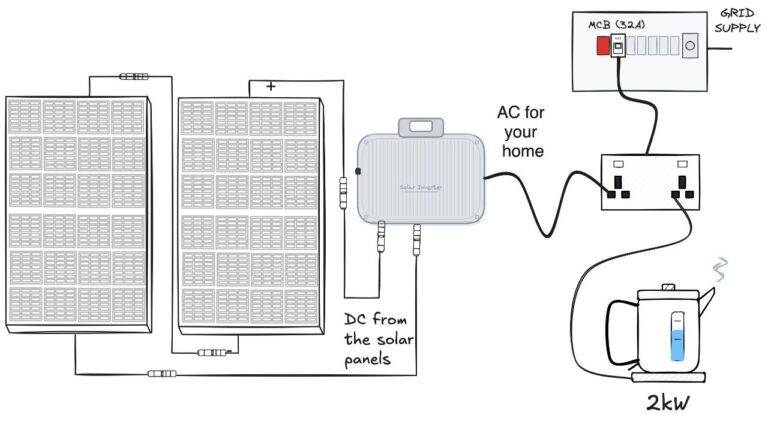
- Plug-in solar feeds 230V AC into a socket: your appliances use it first, so self-consumption decides what you actually save.
- Your breaker cannot see the solar current: a kit injects power downstream of it, so a cable can carry more than its rating while the breaker sits under its trip point. That, not shock risk, is the reason for the socket ban.
- If you already have solar, adding 800W is not a plug-in job: the 3.68 kW G98 limit is cumulative across the property, so a 3 kW array plus a kit drops the whole house into G99 and a formal application.
- Legal in Great Britain since 27 August 2026: the ENA register listed 120 compliant kits on 10 October 2026, the rule is one device per household, and not every home is suitable because the RCD in your consumer unit decides it.
- 800W covers a home’s 200-400W daytime base load: a clipped kit makes roughly 650-800 kWh a year, worth about £40-85 without a battery.
- The plug pins go dead in a fraction of a second: the specification requires them below 34V within 100 milliseconds of losing the grid, which is why nothing works in a power cut.