
Outgoing Octopus is Octopus Energy’s export product family for solar and battery homes. The best tariff depends on your setup: Outgoing Fixed for simple solar-only export, Outgoing Agile when you can time exports, and Octopus Flux when a battery can hit the peak window. Every figure below was checked against Octopus’s own pages on 20 July 2026, and the check is written out in full so you can see what was confirmed and what was not.
| Product | Rate shape on 20 July 2026 | Choose when | Official page |
|---|---|---|---|
| Outgoing Fixed | Flat 12p/kWh, no standing charge | Solar-only home, want predictable income, no desire to watch half-hourly prices | Outgoing Octopus |
| Prime Outgoing | 16p/kWh from 4pm to 7pm, 9p the rest of the day, 12-month term | Export naturally lands in the evening and you want more than the flat rate without going fully dynamic | Outgoing Octopus |
| Outgoing Agile | Half-hourly, tracks the day-ahead wholesale market, uncapped on the upside, 12-month term | You can shift export (usually with a battery and automation) into valuable windows | Agile Outgoing |
| Octopus Flux | A guaranteed export rate in the 4pm to 7pm peak and a lower rate the rest of the day, set by region. Doubles as your import tariff. Intelligent Octopus Flux is closed to new customers | You have a battery and you want a known peak-window rate | Octopus Flux |
Rates checked: what was confirmed, and when
Every current rate, time window and availability status on this page was checked against Octopus’s own product pages and its public products API on 20 July 2026. Where one of those could not be confirmed from a primary Octopus source, it is not stated here as fact. That is why you will not find a headline Agile figure on this page, and why the Flux peak rate is described rather than quoted. Two other kinds of number do appear below, and both are labelled where they sit: my own recollection of what Octopus used to pay, which I could not re-source, and published research on panel degradation and annual yield, which is cited to the study rather than to Octopus.
| Product | Status on 20 July 2026 | What the check confirmed | Source |
|---|---|---|---|
| Outgoing Octopus (flat) | Open to new customers | Flat 12p/kWh, no standing charge, region C (London), direct debit, including VAT | octopus.energy/smart/outgoing |
| Prime Outgoing | Open to new customers | 16p/kWh from 4pm to 7pm and 9p/kWh the rest of the day, sold on a 12-month term | octopus.energy/smart/outgoing |
| Agile Outgoing | Open to new customers | Day-ahead wholesale-linked, half-hourly, uncapped on the upside, sold on a 12-month term. No single p/kWh figure exists for it | octopus.energy/smart/outgoing |
| Octopus Flux | Open to new customers | Three import bands confirmed: cheap 2am to 5am, peak 4pm to 7pm, standard the rest. The band rates themselves are set by postcode and were not confirmed as figures | octopus.energy/smart/flux |
| Intelligent Octopus Flux | Closed to new customers | Octopus’s own page carries the notice: “this tariff is temporarily unavailable. We’ll update this page as soon as it’s back.” No reopening date is given and no current rate is published | octopus.energy/smart/intelligent-octopus-flux |
One trap if you check this yourself. Intelligent Octopus Flux is still listed as available in Octopus’s public products API, with no closing date on the record. The banner on its own product page says the opposite, and the banner is the one that decides whether your application goes anywhere. Where the two disagree, believe the product page.
If you are reading this more than three months after 20 July 2026, treat every rate above as a starting point and open the linked pages before you commit to anything.
Two situations this page does not cover in depth. If your system is DIY and not MCS-certified, start with how to export from a DIY solar system with Octopus. If you have (or want) a battery without panels, the economics live on home battery storage without solar.
Key Takeaways
- Every rate here was checked against Octopus’s own pages on 20 July 2026: Outgoing Fixed pays a flat 12p/kWh, and Intelligent Octopus Flux is closed.
- Your kit decides which product wins, not the headline rate: solar-only, solar plus battery, battery only, EV and heat pump households each land on a different pairing.
- Flux is a combined import and export tariff: joining it replaces your import tariff, so you cannot hold Intelligent Octopus Go at the same time.
- Flux guarantees its 4pm to 7pm rate, Agile Outgoing does not: Agile resets every half hour against the day-ahead wholesale market, uncapped on the upside and low on sunny, windy afternoons.
- Switching tariff with the seasons is worth testing on your own numbers: Flux-shaped in summer, cheap overnight import plus flat Outgoing in winter, and there is a break-even sum on this page that tells you whether it clears.
Agile Outgoing or Flux: which export tariff should you pick?
Pick a Flux-style tariff if you have a battery and want a known price in the 4pm to 7pm peak without watching the market. Pick Agile Outgoing if you will automate exports to chase wholesale spikes and can accept afternoons that pay almost nothing. The shape of the price is the real decision, not the headline number.
Before you weigh the two against each other, one product is off the table. Intelligent Octopus Flux, the fully automated version, is closed to new customers. Its product page carried the notice “this tariff is temporarily unavailable. We’ll update this page as soon as it’s back.” on 20 July 2026, with no reopening date. The manually scheduled Octopus Flux and the dynamic Agile Outgoing are both open, so for a new battery owner the live contest is Agile Outgoing against standard Flux, with the flat 12p Outgoing rate as the no-effort baseline.
Flux pays one guaranteed rate for everything you export between 4pm and 7pm, so you schedule the battery to empty into that window and you are done. Agile Outgoing sets a new price every half hour from the day-ahead wholesale market, with no cap on how high it can go. On a cold, low-wind evening Agile can beat the Flux peak. On a sunny, breezy afternoon the same market pushes the price toward the floor. Flux trades away the upside for a rate you can plan around.
A worked half-hourly example. Say your battery holds 5 kWh to sell during the evening peak:
- Standard Flux pays its fixed peak rate on all 5 kWh across 4pm to 7pm. The payout is the same whether wholesale that evening runs high or low. That predictability is the whole point.
- Agile Outgoing pays the actual half-hourly price. Sell into a tight 5pm to 6pm slot on a still winter evening and you can clear the Flux rate. Sell on a windy July afternoon and the same 5 kWh earns a fraction of it, unless you hold the charge and release it into the day’s priced evening peak.
Who should pick which:
- Battery, wants it hands-off: standard Octopus Flux. You get a guaranteed peak price and only set a charge and discharge schedule once.
- Battery, happy to automate and carry risk: Agile Outgoing. With inverter automation timed to the published half-hourly prices you can beat Flux on the best evenings, but you wear the low-price afternoons.
- No battery, or no appetite for tinkering: the flat 12p Outgoing rate. Prime Outgoing pays 16p from 4pm to 7pm and 9p the rest of the day, but it only pays off if your export is concentrated in that window, which usually means a battery or a strong evening generation bias; a passive solar-only home generally does better on Fixed.
- Wanted the automated Intelligent Flux: you cannot join it right now. Use standard Flux or Agile Outgoing until Octopus reopens it.
Which Octopus setup fits your kit?
After running my own solar and battery setup for years, this is the part I wish someone had put in front of me first. The headline rate is not what decides your tariff. What decides it is what you own, because the products carry different eligibility conditions and because Flux replaces your import tariff as well as your export one. Find your row.
Ofgem’s national figures point the same way. In its SEG Year 5 report the average tied export tariff, the kind you can only have if you meet the supplier’s conditions, paid 14.54p/kWh against 4.39p for an untied one, and 83.8% of registered installations were on a tied tariff. The rates worth having are the conditional ones, which makes your eligibility the thing to sort out first and the headline number the thing to check second.
| Your kit | Import tariff | Export tariff | Why | The trap |
|---|---|---|---|---|
| Solar, no battery | Whichever Octopus import tariff you already hold | Outgoing Fixed, 12p/kWh | You have nothing to time, so a flat rate collects everything without any scheduling at all | Prime Outgoing’s 16p peak only beats a flat 12p if most of your export lands between 4pm and 7pm, and solar alone rarely does that |
| Solar and battery | Octopus Flux (it is both halves) | Octopus Flux, or Agile Outgoing if you will automate | You can put stored energy into the 4pm to 7pm window on purpose, which is the only reason the peak rates exist. The full economics are in Octopus Flux vs Agile for a home battery | Flux is one combined product, so taking it replaces your import tariff too. Its import peak is also 4pm to 7pm, so any grid power you draw then costs you on both sides of the meter |
| Battery, no solar | Flux, or any cheap-overnight import tariff | Outgoing Fixed, or Agile Outgoing | The whole trade is buy cheap overnight, sell into the evening. No generation needed | You are buying every unit you sell, so the spread has to cover round-trip losses and cycle wear before it earns anything. Battery storage without solar works through whether that stacks up |
| Solar and EV | Intelligent Octopus Go, 8p/kWh from 11.30pm to 5.30am, or 7p when Octopus schedules the charge itself | Outgoing Fixed, 12p/kWh | The car moves far more kWh than your export does, so the cheap import window is worth more to you than a peak export rate | Intelligent Go needs a compatible car or charger connected through the Octopus app. On 20 July 2026 that meant Octopus Charge, Andersen or Ohme, not any charger you happen to own |
| Solar, battery and EV | You have to choose: Intelligent Octopus Go for the car, or Flux for the battery | Outgoing Fixed alongside Intelligent Go, or Flux export alongside Flux import | A household holds one import tariff. Flux and Intelligent Octopus Go cannot both be it | Whichever you take, you give up the other. Work out which moves more kWh in your house across a year: overnight car charging, or battery discharge into the evening peak |
| Heat pump in the mix | Cosy Octopus | Outgoing Fixed, 12p/kWh | Cosy’s three cheap bands (4am to 7am, 1pm to 4pm, 10pm to midnight) sit 51% below its day rate and line up with when a heat pump wants to run and preheat | Cosy’s peak sits 50% above the day rate from 4pm to 7pm, which is exactly when a cold evening makes the heat pump work hardest. Cosy also requires you to be an Octopus customer already |
If you run a Sunsynk or Deye inverter, note that the scheduling which makes any peak-window tariff pay is set on the inverter, not by Octopus. The Sunsynk settings for Octopus Flux walk through exactly which windows to program.
Switching: what it breaks
The switching question people ask is whether it costs anything. The more useful question is what a switch takes away from you, because these products are not independent of each other.
- Flux replaces your import tariff. It is one combined import and export product, not an export add-on. Taking Flux means Flux is what you buy electricity on, so any other Octopus import tariff you hold goes with it. That includes Intelligent Octopus Go, which is why a solar-battery-EV household has to pick a side.
- Outgoing needs Octopus to supply your import. Octopus’s wording on the Outgoing page, checked 20 July 2026, is that you can only pair Outgoing Octopus with certain import tariffs, and it does not publish which ones on that page. Move your import to another supplier and you drop off Outgoing entirely, back to whatever that supplier’s Smart Export Guarantee tariff pays.
- Leaving Intelligent Flux looks one-way. It requires you to already hold both an Octopus import and an Octopus export tariff before you apply, and it is closed to new customers. Octopus does not say anywhere I could find whether someone who leaves can come back while it stays closed. Until it reopens, treat leaving as permanent.
- A recent Feed-in Tariff start blocks Outgoing Fixed. You are not eligible if your FiT payments started in the last 12 months. This one catches people who have just had an older system transferred.
- The meter decides more than you think. Outgoing works with almost all SMETS2 meters and most SMETS1. Intelligent Octopus Go is narrower: SMETS2, or a SMETS1 made by Secure.
If your system is not MCS-certified, the documentation route onto an export tariff is set out in exporting solar energy from a DIY system.
Switching: what it costs
I am going to be plain about the limits of what I could verify here. On 20 July 2026 I could not confirm Octopus’s exit-fee terms or its switch lead time from a primary Octopus page, so I am not going to quote either. What I can tell you is that both Prime Outgoing and Agile Outgoing are sold on 12-month terms, and a fixed term is exactly where an exit fee would live if there is one. Read the terms of the tariff you are leaving before you click.
The cost you can plan for is the gap. Assume a switch is not instant, and that you sit on the old rate while it settles. If you are moving onto a peak-window tariff in May, a few weeks of lag eats a real slice of the season you moved for.
The second delay is the meter, not the tariff. Flux and Agile both need half-hourly export readings. If your meter is not already sending them, the switch waits on that, and no amount of chasing Octopus speeds it up.
If you have an EV or a heat pump
EV. Intelligent Octopus Go has two cheap rates, and its own landing page headlines only one of them. The 8p/kWh is the guaranteed night-window price, running 11.30pm to 5.30am. Separately, when Octopus’s scheduler decides when your car charges, you pay 7p/kWh for the car and the house both, and that price holds even when it dispatches the charge outside the night window. Both figures are quoted from Octopus’s EV tariff pages as they stood on 20 July 2026, and both appear to vary by region in places, so read them as representative rather than as fixed national numbers. The tariff needs a compatible car or charger linked through the Octopus app. Plain Octopus Go has a fixed 00.30 to 05.30 window and no compatibility requirement, which matters if your charger is not on the supported list. Which of the two suits you is worked through in Octopus Go vs Intelligent Octopus Go; the point for this page is that either one occupies the import slot Flux would otherwise take.
Heat pump. Cosy Octopus is the heat-pump-shaped import tariff, with three cheap bands a day at 51% below its day rate and a peak 50% above it from 4pm to 7pm. It requires a heat pump, electric boiler or electric radiators, and an existing Octopus account. Pair it with flat Outgoing on the export side and you keep the heating economics and the export income separate, which is easier to reason about than trying to make one tariff serve both.
The March 2026 export rate cut: what changed
The flat Outgoing rate came down to 12p/kWh in the spring, and I had to redo my own payback maths when it happened. My recollection is that the cut landed on 1 March 2026 and took the rate from 15p, but I could not re-source either the old rate or the date from a live Octopus page on 20 July 2026, so treat both as my memory rather than as checked fact. The only export figure I will state as current is the 12p the product page shows today. I write about what the cut did to my own numbers below, in why I model export income conservatively. The point for you is not the size of that cut. It is that a flat export rate is a number Octopus can revise, and any payback plan built on one needs to survive it moving.
It helps to see where 12p actually sits. Ofgem’s Smart Export Guarantee annual report for SEG Year 5, published December 2025, counted 50 SEG tariffs from 11 licensees. Of those 50, 29 were tied (you have to buy your electricity from that supplier too) and 21 were untied. The average untied rate was 4.39p/kWh. The average tied rate was 14.54p. Octopus’s flat 12p sits between the two: well above what an untied tariff pays, below the best tied deals, and conditional in the same way, because it needs Octopus to supply your import.
What this means for solar owners
It makes self-consumption the bigger prize. Every kWh you use at home instead of exporting avoids buying one at your import rate. To give that a scale: the blended single-rate figures Octopus published for region C on 20 July 2026 ran from 26.63p/kWh on Cosy to 35.66p/kWh on Flux. Against a 12p export rate, a unit you keep is worth roughly two to three times a unit you sell. If you do not already have a battery, the maths for adding one just got stronger. If you do have one, moving your exports into the peak window via Agile Outgoing or standard Octopus Flux is the smarter play.
For how a managed battery package compares with DIY solar plus an export tariff, I have written that up separately in Octopus Zero Bills vs DIY solar.
The Octopus export tariffs in detail
Each product in more detail, for anyone who wants the specifics rather than the comparison. Prime Outgoing is the fourth variant and the tables above already carry it: 16p from 4pm to 7pm, 9p the rest of the day, on a 12-month term.

Outgoing Fixed
Rate: 12p per kWh, flat, export only, with no standing charge of its own (region C, direct debit, including VAT, checked 20 July 2026)
Best for: Homeowners with solar panels but no battery storage.
The Outgoing Fixed tariff is the most straightforward option. You get paid a flat 12p for every kilowatt-hour you export, whenever you export it. There is nothing to monitor and nothing to time. Just generate, use what you need, and export the rest. The trade-off is that a flat rate lags the market in both directions: it stays where Octopus set it until Octopus revises it, whichever way wholesale has moved in between.
Eligibility to check first: you need a smart meter (almost all SMETS2 meters work, and most SMETS1), and you are not eligible if your Feed-in Tariff payments started in the last 12 months.
Agile Outgoing
Rate: resets every 30 minutes against the day-ahead wholesale market, uncapped on the upside. No single figure exists for it, which is the point of the product
Best for: Owners with battery storage who will actually automate their export timing.
Outgoing Agile is Octopus’s dynamic export tariff, sold on a 12-month term. The rate changes every half hour and follows the day-ahead wholesale market rather than sitting where Octopus set it. That is why it climbs on tight evenings and falls on sunny, windy afternoons when the grid has more power than it needs.
Because the rate is the market, Agile only rewards you for placing export where the market is paying. Without a battery you export when the sun decides, which is the middle of the day, which is when solar is least scarce. With a battery you can hold the surplus and release it into the evening. That is the whole difference between Agile earning more than the flat 12p and earning less.
I am deliberately not quoting an annual average for Agile against Fixed. I have seen that comparison made confidently in a lot of places, including in an earlier version of this page, and I could not source a defensible number for it. If someone gives you one, ask them where it came from.
Requirement: a smart meter sending half-hourly export readings. Octopus itself recommends storage to get value out of this tariff.
Octopus Flux
Peak export (4pm to 7pm): a guaranteed rate that Octopus sets by region. It does not publish a single national figure, and I am not going to invent one: enter your postcode on the Octopus Flux page to see yours.
Off-peak and daytime export: a lower flat rate, again set by region, alongside a cheap import window from 2am to 5am for topping the battery up.
Best for: Homeowners with solar panels and a battery they can schedule.
Octopus Flux is the joinable high-peak tariff for battery owners. It pays a guaranteed rate for everything you export in the 4pm to 7pm peak and a lower rate the rest of the day, and it doubles as your import tariff with three bands: cheap from 2am to 5am, peak from 4pm to 7pm, standard the rest of the time.
What standard Flux needs: a battery whose charge and discharge schedule you can set, a smart meter sending half-hourly readings, and Octopus as your import supplier, because Flux is your import tariff. Solar is optional here. The tariff works perfectly well for a battery-only home buying cheap overnight and selling into the peak, and it is the closed Intelligent tier, not this one, that requires solar alongside a battery Octopus can control. Flux carried a standing charge of 42.42p a day in region C on 20 July 2026, but do not read that as a cost Flux adds. Every import tariff carries a standing charge, and Flux replaces the one you are already paying: Cosy sat on the same 42.42p that day and Octopus Go on 44.12p. What you should compare is the difference between the two, and the import peak that lands in the same 4pm to 7pm window, so any grid power you draw then costs you on both sides of the meter.
Availability note, 20 July 2026: standard Octopus Flux is open to new customers. Intelligent Octopus Flux is not. Its page says only that the tariff is temporarily unavailable, gives no reopening date, and says nothing about what happens to households already on it, which I could not confirm either way. Octopus does not publish its rate while the product is closed, so anyone quoting you one is guessing. If you want a battery export tariff today, the choice is standard Flux or Agile Outgoing.
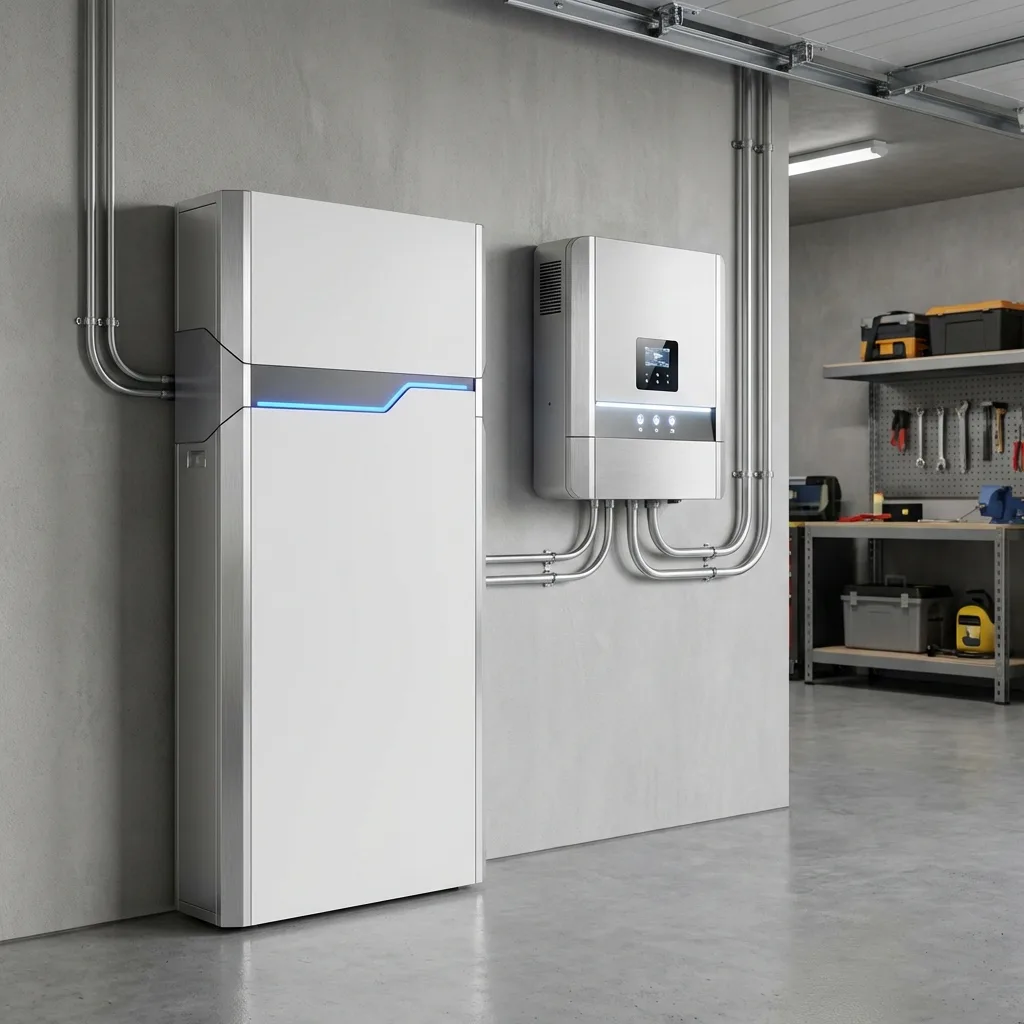
On standard Flux you set the schedule yourself: charge the battery during the 2am to 5am window, then discharge into the 4pm to 7pm peak. The paused Intelligent version did that automatically by handing battery control to Octopus. Without it, you point your inverter or battery app at the same two windows.
Batteries: any battery whose inverter or app lets you set charge and discharge times works for standard Flux. The automated Intelligent tier was narrower. The integrations listed on its tariff page when I checked were AlphaESS, Ecoflow, Enphase, Fox ESS, GivEnergy, Hanchu ESS, Huawei, Sigenergy, SolarEdge and SunPower. Octopus’s own FAQ page listed a shorter, older set, so the two pages disagreed; the tariff page is the more current of the two.
Is Battery Storage Worth It with Octopus Flux?
The answer turns on how much you export and on your region’s Flux peak rate, so instead of handing you a figure that will be wrong for your postcode, here is one day worked through end to end with the arithmetic left showing. Swap in your own rates and the same sum answers it for you.
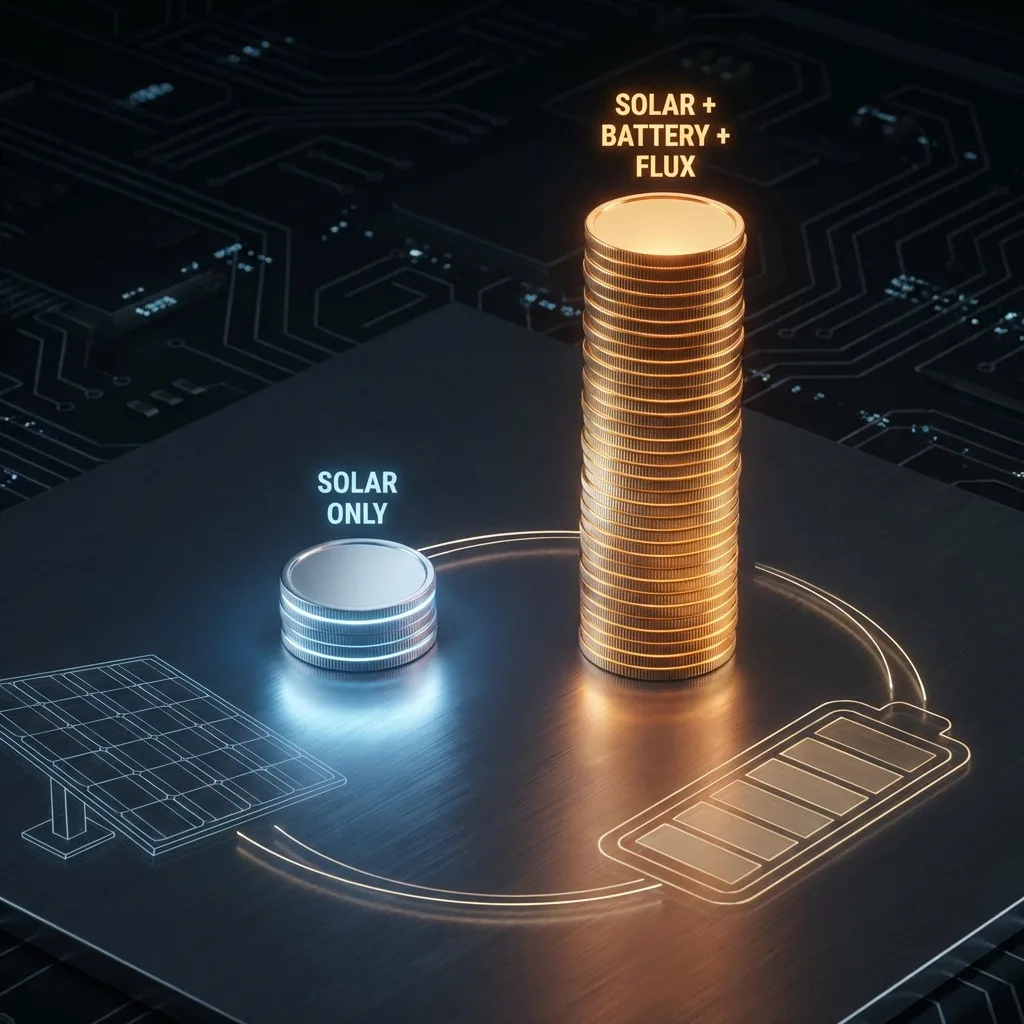
A battery day on Flux, worked through
Say you have:
- A 4kW solar array making about 15 kWh on a good summer day
- A 5kWh battery you can schedule
- Standard Octopus Flux (Intelligent Flux is closed to new customers)
You use 8 kWh across the day, which leaves 7 kWh of surplus.
Without a battery, on Outgoing Fixed: all 7 kWh goes out at 12p, which is 84p on that day. Nothing to schedule and nothing to get wrong. Whatever import tariff you hold alongside it carries its own standing charge, which you would be paying either way, so it stays out of this comparison.
With a battery, on standard Flux: 5 kWh goes into the battery and out again between 4pm and 7pm at your region’s peak rate, and the remaining 2 kWh leaves at Flux’s lower daytime rate. Flux sets both rates by postcode and publishes no national figure, so instead of picking one number and letting it settle in your head as fact, I am going to run the same day twice on two pairs of rates I have made up. None of these four figures is an Octopus number. Enter your postcode on the Flux page and use what it actually gives you.
Scenario A, a strong peak rate. Say the peak comes out at 25p and the daytime rate at 5p. The day goes: 5 kWh out at 25p is 125p, plus 2 kWh at 5p is 10p, so 135p in total against 84p on flat Outgoing. The export side is 51p ahead on the day.
Scenario B, a weak peak rate. Now say the peak is 15p and the daytime rate is the same 5p. The day goes: 5 kWh out at 15p is 75p, plus 2 kWh at 5p is 10p, so 85p against the same 84p. The export side is 1p ahead, which is a dead heat.
Same roof, same battery, same 7 kWh surplus. The only thing that changed was the peak rate, and the answer went from a comfortable win to no difference worth the trouble of scheduling anything. That is why no honest article can give you a national answer here. The peak rate your postcode actually gets decides the whole question, and it is the one number nobody can look up on your behalf.
Now the part almost every comparison of these two gets wrong. You do not subtract Flux’s whole 42.42p standing charge from that 51p. Flux is an import tariff as well as an export one, so it replaces the import tariff you already hold, and that one has a standing charge of its own. In region C on 20 July 2026, Cosy charged 42.42p a day and Octopus Go charged 44.12p. Move to Flux from Cosy and your standing charge does not move at all. Move from Go and you save about 1.7p a day. What belongs in the sum is the difference between the two standing charges, which across Octopus’s own import tariffs is roughly nothing, not the full 42.42p.
What does decide it is the import unit rate. Flux’s blended single-rate figure for region C on 20 July 2026 was 35.66p/kWh, against 26.63p on Cosy. Every unit you buy from the grid on Flux rather than Cosy therefore costs you around 9p more. In scenario A, buying 6 kWh from the grid on a given day swallows the whole 51p the export side won. In scenario B it takes about a tenth of a kWh to wipe out the 1p, which is roughly one kettle boil. That, and not the standing charge, is the thing to put next to your export gain.
The shorthand, if you want to carry it around: with a peak rate P and a daytime rate D in pence, a 7 kWh surplus day pays 5P + 2D on Flux against 84p on flat Outgoing. Clear 84p and the export side is winning. Then adjust for what happens to your import bill, which means the difference in standing charge, close to zero between Octopus import tariffs, plus the difference in unit rates multiplied by however much you still buy from the grid.
Across a real year the gain usually shrinks, because that 7 kWh surplus collapses in winter while the import side of Flux does not get any cheaper. This is why I never let export arbitrage make the case for a battery on its own. The battery earns its keep on the import you avoid: on region C’s published blended rates for 20 July 2026, a unit you keep was worth 26.63p on Cosy or 35.66p on Flux, against 12p for a unit you sell. Work out your own annual export in kWh, multiply by the rate you can actually get, and treat the result as the smaller half of the case.
Should you switch tariff with the seasons?
This is a strategy, not a rate. I have no verified figure for what a summer-and-winter split earns over holding one tariff all year, and I am not going to put one on the page to make the idea look more solid than it is. What I can give you is the method, and the conditions under which it is worth the trouble.
The summer case is placement. From roughly April to September your surplus is large and it arrives in the afternoon, which is when the grid values it least. A battery lets you carry it forward into the 4pm to 7pm window, and a Flux-shaped tariff is what pays you for putting it there. That is the season where a peak-window product earns its higher rate rather than just advertising it.
The winter case is import. By December the surplus has mostly gone. What you still have is a battery you can fill from the grid overnight and a house that costs real money to run. A cheap overnight import tariff plus the flat 12p Outgoing rate fits that shape better than a peak-export product you can no longer feed. If you want to go further and trade the battery day by day rather than sitting on a fixed schedule, the Agile battery strategy guide is the one that covers the daily charge, hold and discharge decision.
The trigger is your data, not the calendar. Do not switch on a date. Switch on a condition: how many kWh of surplus can you actually land in the peak window on a typical day this month? That number is in your inverter or battery app, and it falls off a cliff far more sharply than the temperature does.
Write the condition as one sum. Break-even export kWh equals the extra you pay per day to be on the peak-window tariff, divided by the export-rate advantage. The extra you pay is the difference in import unit rates multiplied by the units you buy from the grid, plus the difference in standing charge, which between two Octopus import tariffs is usually a fraction of a penny rather than the whole 42p. Divide that by the extra pence per kWh the peak pays over the flat 12p. The answer is how many kWh you have to land in the peak window every day just to break even. If your battery cannot deliver that many, you are paying for a tariff you cannot use. Octopus gives you both the unit rates and the standing charge by region when you enter a postcode, so run this on your own numbers.
Then weigh the friction. A switch is not instant, and you sit on the old rate while it settles, so a move made in May might not land until the season is well underway. Prime Outgoing and Agile Outgoing are both 12-month terms. And everything in switching: what it breaks still applies, so a summer move onto Flux is also a move off whatever import tariff you were holding, EV tariff included.
Who this is not for. Not for you if you have no battery, because you have nothing to place in the peak window in either season. Not for you if your surplus is small, because the break-even sum above will not clear. And not for you if switching twice a year is the kind of admin you will forget, because a season spent on the wrong tariff costs more than a season on the right one gains.
How to Sign Up for an Octopus Export Tariff
- Import from Octopus on a compatible tariff: Octopus says Outgoing pairs only with certain import tariffs, without publishing the list on the product page. Keeping another supplier for your import limits you to that supplier’s SEG route instead.
- Check your smart meter: almost all SMETS2 meters work and most SMETS1 meters do. Flux and Agile additionally need half-hourly export readings.
- Register your system: you will give Octopus details of your array size and battery. A DIY, non-MCS system needs the extra documentation set out in exporting solar energy from a DIY system.
- Choose your tariff: with a battery, standard Octopus Flux is the joinable high-peak option, since Intelligent Flux is closed to new sign-ups. Without a battery, start on Outgoing Fixed, move to Prime Outgoing if your export genuinely lands between 4pm and 7pm, and consider Agile if you will automate.
- Set your battery schedule: on standard Flux you point your inverter or battery app at the 2am to 5am charge window and the 4pm to 7pm export peak yourself.
You can sign up directly through the Octopus Energy website. If you like to tinker, Agile plus a battery is the combination that rewards it, and you can automate the export timing to catch price spikes rather than watching the app.
Common Questions
Do I need to be an Octopus Energy customer for my import electricity?
Yes, for the Outgoing tariffs. Octopus’s own wording is that Outgoing pairs only with certain import tariffs, so an Octopus import supply is a condition of taking it. Keep another supplier for your import and you are limited to that supplier’s Smart Export Guarantee tariff. Ofgem’s SEG Year 5 report put the average untied SEG rate at 4.39p/kWh, roughly a third of Octopus’s flat 12p. Flux goes further still, because it is a single combined import-and-export product, so it has to be your import tariff too.
Can I switch tariffs later?
Yes. Prime Outgoing and Agile Outgoing are 12-month terms, so read their exit terms on the tariff itself rather than taking anyone’s word for it, mine included. The bigger question is what a move takes away rather than what it costs, and switching: what it breaks covers that.
What happens on cloudy days?
If you have a battery on Flux, it can still charge from cheap grid electricity in the 2am to 5am window and export during the 4pm to 7pm peak, so a dull day need not cost you the peak payment. What you are arbitraging is the gap between Flux’s own two fixed bands, cheap overnight import against the guaranteed evening export rate, both set by region and both known to you in advance. That is not the same thing as chasing half-hourly wholesale prices, which is what Agile Outgoing does. On Flux the spread is fixed, so the only question is whether it is wide enough in your region to cover round-trip losses and battery wear.
Why I model export income conservatively
When I first modelled my Outgoing Octopus payback, I ran the numbers on the Fixed rate at the time: 15p/kWh. Then on 1 March 2026 it dropped to 12p, a 20% cut, and my payback maths needed redoing. The lesson stuck: export income is the softest number in any solar ROI.
The rate is only part of it. Your panels make a little less every year, and the weather does not read your spreadsheet. The next two figures come from published research rather than from an Octopus page, so they sit outside the rate check at the top of this article: crystalline silicon modules lose output at around 0.5% a year, the NREL median across 11,000 measured systems, and annual yield swings year to year by roughly 8 to 10% across northern Europe (JRC), with the UK sitting further north still. Put a rate cut, a low-sun year and a few years of degradation together, and a flattering model falls apart fast.
So model it low. Use today’s rate, not last year’s. Knock half a percent off generation each year. Treat a sunny year as a bonus, not the baseline. If the system still pays back on conservative numbers, it’s a good buy. If it only works on optimistic ones, it isn’t.
If you are still on a plain Smart Export Guarantee rate, the first thing I would do is look up what it actually pays and hold it against the flat 12p. Ofgem’s SEG Year 5 average for an untied tariff was 4.39p/kWh, so for a lot of people that gap is the easiest money on this page. The other half is how much you export at all. After setting up Solar Assistant automation rules, my own annual export went from 1,766 kWh to 3,914 kWh from the same panels, and the rate you are on multiplies that, either way.
One route sits outside all of this. Octopus also offers Octopus Zero Bills, a managed package that aims to cover your household electricity use in exchange for letting Octopus manage a qualifying solar, battery and heat-pump setup. It has its own eligibility and system requirements and is a fundamentally different model from the export tariffs above. I break down the trade-offs in a separate article.
Related: Choosing the right battery for your solar system, and exporting solar energy from a DIY setup.
Sources
Every Octopus rate, window and availability status on this page was checked against the following primary sources on 20 July 2026. Nothing here comes from a comparison site or a search snippet.
- Outgoing Octopus product page, for the flat 12p rate, Prime Outgoing’s 16p and 9p bands, Agile Outgoing’s mechanism, and the smart meter and Feed-in Tariff eligibility conditions.
- Octopus Flux product page, for availability, the three import bands and the region C standing charge.
- Intelligent Octopus Flux product page, for the closure notice and the battery integration list.
- Intelligent Octopus Go and Octopus Go product pages, plus Octopus’s EV tariffs page, for both off-peak windows, the 8p night rate and the 7p scheduled-charging rate.
- Cosy Octopus product page, for the three cheap bands, the peak band and the eligibility conditions.
- Octopus public products API, for standing charges and blended single-register rates for region C.
- Ofgem, Smart Export Guarantee Annual Report, SEG Year 5 (December 2025), for the tied and untied tariff counts and average rates.
