
A typical 4kW solar system costs around £7,000 installed in 2026 and pays for itself in about 13 years, followed by roughly nine years of much lower effective unit cost after payback, with standing charges still due. That is why solar panels are still worth it in 2026 for most UK homes with a suitable roof. This is not a hype piece. I break down the real numbers: install cost, annual savings, payback by system size, and the red flags that make solar a bad investment.
If the idea of installing your own system feels like too much, there is now a managed alternative. Octopus Zero Bills bundles solar, a battery, and a heat pump into a single tariff with no energy bills for up to 10 years. It costs more and you give up control, but for some households the simplicity is worth it.
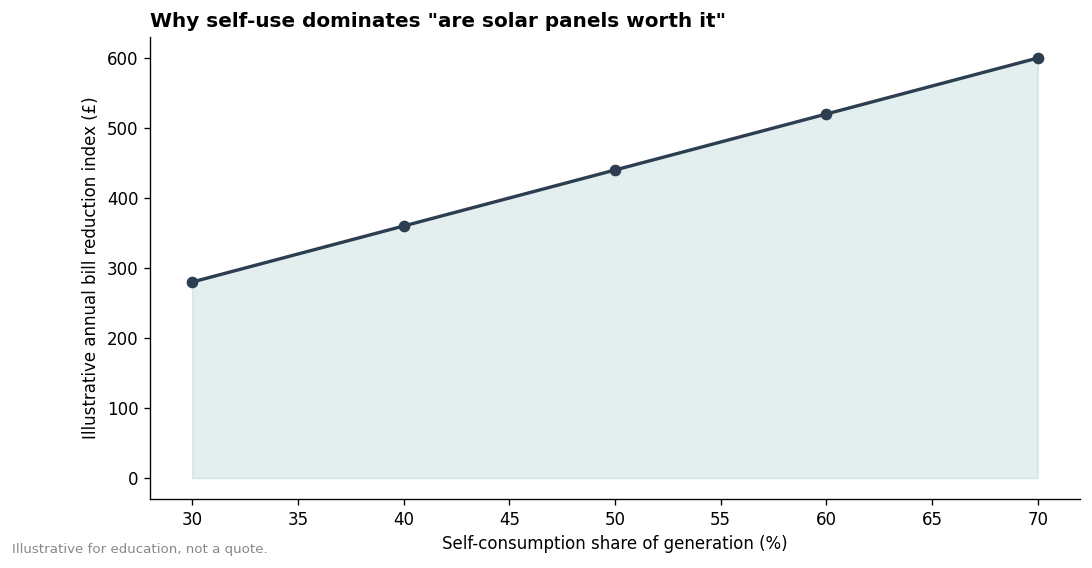
Around 244,000 UK households installed solar in 2025, a record year. The question is no longer whether solar works, it is whether the sums work for your roof, your usage and your tariff. Every figure below is shown with its working so you can rerun it with your own numbers.
2026 Verdict by Self-Use Level
Self-use is the number that decides whether solar is worth it for you. Export pays far less than avoided grid electricity, so the same 4kW array can look like a strong buy or a long wait depending on how much of its output lands inside the house.
| Self-use level | Typical household | Rough annual benefit on 4kW | 2026 verdict |
|---|---|---|---|
| High (70%+) | Home daytime use, heat pump, EV, or a battery that stores surplus | about £700-£850+ | Buy if the roof is workable. Payback often lands near or under the 13-year baseline once self-use stays high. |
| Medium (40-60%) | Someone home part of the day, or load-shifting with timers and appliances | about £450-£600 | Usually worth it on a suitable roof. Plan for a battery if evenings dominate demand. |
| Low / export-only (under 30%) | Empty 9-5 house, little daytime load, no battery plan | often under £330-£430 | Weak case at flat SEG rates. Fix self-use first, or skip until usage rises. |
Kill Criteria: When You Should Not Buy
Use this list as a hard filter before you spend a day collecting quotes. If two or more items apply, solar is probably the wrong next move for this house.
- Heavy, persistent shade for hours each day from trees, taller buildings, or a large chimney bank. Partial shade can be mitigated; deep shade usually cannot.
- North-facing main roof with no south, east, or west alternative. Expect roughly 40-50% less generation than south-facing and payback that can stretch past 20 years.
- Very low electricity use under about 6kWh/day without an EV, heat pump, or battery plan. You will export most of the output at a few pence per kWh.
- Moving within about 5 years unless you are confident the local market will repay the install cost in sale price. Property uplift is real but not guaranteed.
- Roof that needs replacement soon. Remove-and-refit costs of £1,000-2,000 erase a chunk of the first-decade return.
- Listed building, asbestos roof, or blocked planning that makes a lawful install disproportionately expensive or uncertain.
Key Takeaways
- Payback: a 4kW system costs £6,000-8,000, pays back in about 13 years, then generates £4,500-5,800 in net savings over a conservative 22-year lifespan
- Battery: adding storage costs £3,000-4,500 more but lifts self-consumption from 40-50% to 70-80%, which is where the real savings live
- Timing: 0% VAT until March 2027 and competitive installer pricing after a record 2025 make 2026 a sensible entry point
- Property: some UK estate-agent claims put solar in a multi-thousand-pound band to a typical home’s value and lifts EPC ratings towards C or better
- Skip it if: heavy shading, a north-facing roof, low usage (under 6kWh/day) or moving within 5 years all stretch payback past the point of sense
The 2026 Energy Crisis Context
The Ofgem price cap for 1 July to 30 September 2026 puts electricity at 26.11p per kilowatt-hour (kWh), with a daily standing charge of 57.19p. For a typical household consuming 2,700 kWh a year, that is about £705 in unit charges plus roughly £209 in standing charges, before any gas heating. The cap is reset quarterly. The figure for October to December 2026 is not published yet and is due by 26 August, so treat 26.11p as valid only to 30 September. The January to March 2026 rate was 27.69p, which is why older savings figures on this site and elsewhere run slightly higher.
This represents a marginal 0.2% increase from the previous quarter, but the broader trend is unmistakable: energy prices remain volatile and structurally higher than pre-2021 levels. The price cap has fluctuated dramatically over the past three years, and there’s no guarantee of sustained decreases. According to Ofgem’s January 2026 announcement, wholesale market conditions continue to drive uncertainty.
Against this backdrop, solar panels offer a hedge: once installed, your cost per kWh drops to just 4-5p when amortised over the system’s conservative 22-year lifespan. That’s an 82-85% reduction compared to grid electricity.
Record-Breaking 2025: Why 244,000+ Households Chose Solar
2025 was the UK solar market’s strongest year on record. According to PV Magazine citing Department for Energy Security and Net Zero (DESNZ) data, the Microgeneration Certification Scheme (MCS) recorded 203,125 certified installations by early November 2025, with approximately 244,000 total rooftop installations completed throughout the year. This shattered the previous annual record set in 2011.
Why the surge? Three converging factors:
- Financial Pressure: Sustained high energy prices made the ROI calculation compelling for mainstream homeowners, not just early adopters
- Government Support: 0% VAT on solar panel installations (extended through March 2027) reduced upfront costs by 20%
- Market Maturity: Increased installer competition and improved technology drove prices down while quality and warranties improved
This is not a bubble. It is a rational response to structurally higher energy prices, and when your neighbours’ bills visibly drop, the case makes itself.

The 2026 ROI Breakdown: Real Numbers
Let’s examine two scenarios using current 2026 pricing and conservative assumptions. We’ll use a 4kW system, the most common size for a 2-3 bedroom UK home.
Scenario 1: Solar-Only System
System Specifications:
- 4kW solar panel system (10-12 panels)
- MCS-certified installation
- Total cost: £6,000-8,000 (average £7,000)
Annual Generation: 3,400-3,800 kWh (based on UK average solar irradiance of 850-950 kWh/kWp/year)
Self-Consumption: Without battery storage, a household with someone in during the day uses 40-50% of generated electricity directly (1,360-1,900 kWh). The remainder is exported. If the house sits empty 9 to 5, self-consumption can drop to around 25%, which pushes payback out by several years. Be honest with this number, it is the one that decides your result.
Financial Breakdown:
| Component | Calculation | Annual Value |
|---|---|---|
| Grid Savings | 1,680 kWh × 26.11p/kWh | £439 |
| Export Income (SEG) | 1,720 kWh × 5p/kWh (conservative) | £86 |
| Total Annual Benefit | Savings + Export | £525 |
| Payback Period | £7,000 ÷ £525 | 13.3 years |
| 22-Year Savings | £525 × 22 – £7,000 | £4,550 |
Note: SEG rates vary by supplier. Conservative 5p/kWh used; actual rates range from 3p to 30p+ depending on tariff. See Octopus Energy Export Tariffs for current options.
Scenario 2: Solar + Battery System
System Specifications:
- 4kW solar panel system
- 10kWh battery storage
- Total cost: £10,000-11,000 (average £10,500)
Self-Consumption: Battery storage enables 70-80% self-consumption (2,380-3,040 kWh) by storing excess daytime generation for evening use.
Financial Breakdown:
| Component | Calculation | Annual Value |
|---|---|---|
| Grid Savings | 2,710 kWh × 26.11p/kWh | £708 |
| Export Income (SEG) | 690 kWh × 5p/kWh | £35 |
| Total Annual Benefit | Savings + Export | £743 |
| Payback Period | £10,500 ÷ £743 | 14.1 years |
| 22-Year Savings | £743 × 22 – £10,500 | £5,846 |
Note: Battery degradation factored at 80% capacity after 6,000 cycles (16+ years). Modern LiFePO4 batteries like the Fogstar Energy 16.1kWh offer superior longevity. See our battery storage guide for detailed analysis.
How Long Does Each System Size Take to Pay Back?
Same method, three common sizes. Costs are typical MCS-installed quotes at 0% VAT, generation assumes 850 kWh per kWp on an unshaded roof, and savings use the 26.11p cap rate for 1 July to 30 September 2026 with a 5p SEG floor. Larger systems export a bigger share of what they generate, so payback does not shorten as much as you might expect.
| System | Typical cost | Annual generation | Annual benefit | Payback |
|---|---|---|---|---|
| 3kW | £5,500 | ~2,550 kWh | ~£395 | ~13.9 years |
| 4kW | £7,000 | ~3,400 kWh | ~£525 | ~13.3 years |
| 6kW | £9,500 | ~5,100 kWh | ~£685 | ~13.9 years |
Roof direction moves these numbers more than system size does. An east/west split generates 70-80% of a south-facing roof’s output, which adds roughly 2-3 years to payback, but it spreads generation across morning and evening when you are actually home to use it. The 3-bed east/west system guide runs the full PVGIS numbers for that layout.
The Battery Necessity Argument
Here’s the critical insight that changes the solar equation in 2026: self-consumption is worth 5-6× more than export.
When you use solar electricity directly, you avoid paying 26.11p/kWh from the grid, the cap rate to 30 September 2026. When you export it, you receive just 5-15p/kWh depending on your SEG tariff. That 11-21p/kWh difference makes battery storage financially compelling despite the additional upfront cost.
The problem: solar generation peaks at midday (11am-3pm) when most households use minimal electricity. Peak household demand occurs 4pm-7pm, exactly when solar production drops off. Without battery storage, you’re forced to export cheap solar during the day and buy expensive grid electricity in the evening.
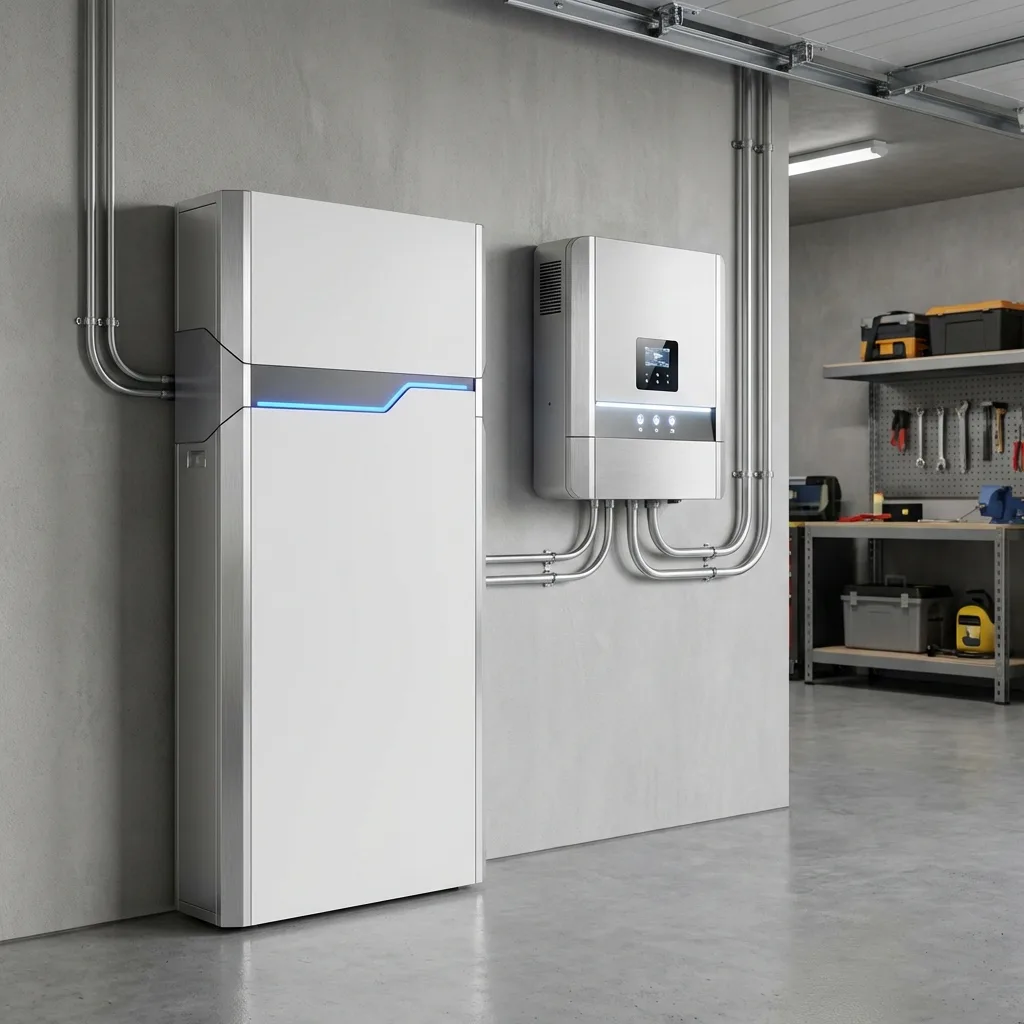
Battery storage solves this timing mismatch. A 10kWh battery captures excess midday generation and releases it during peak evening hours, effectively time-shifting your solar electricity to when you actually need it. This is why adding a battery increases self-consumption from 40-50% to 70-80%, and why the total savings increase by £218 annually despite the £3,500 additional cost.
On a time-of-use tariff the battery advantage grows. Standard Octopus Go charges 9.5p/kWh between 00:30 and 05:30 against a London day rate of 31.64p, so you can fill the battery overnight and run the house off it through the day, an arbitrage of about 22p/kWh even without solar generation. Intelligent Octopus Go goes lower still at 8p/kWh over a longer 23:30 to 05:30 window, but eligibility is gated on having a compatible EV or home charger, so it is not open to a household without one. Both night rates are fixed nationally and were checked on 24 July 2026. Day rates and standing charges vary by region.
Case Study: The “Force Export” Strategy
One SEC reader took battery arbitrage to the next level, proving just how profitable an optimised setup can be.
The Setup: Started 2024 with a 3.87kW array, then added 3.28kW mid-year (7.15kW total). Combined with battery storage and an Octopus Flux tariff, they implemented a “Force Export” strategy:
- Import Cheap: Charge battery overnight at 7p/kWh, the Flux import rate they were on across 2024 and 2025
- Run on Battery: Use stored energy during the day
- Export Everything: Send 100% of solar to the grid at 20p+ rates
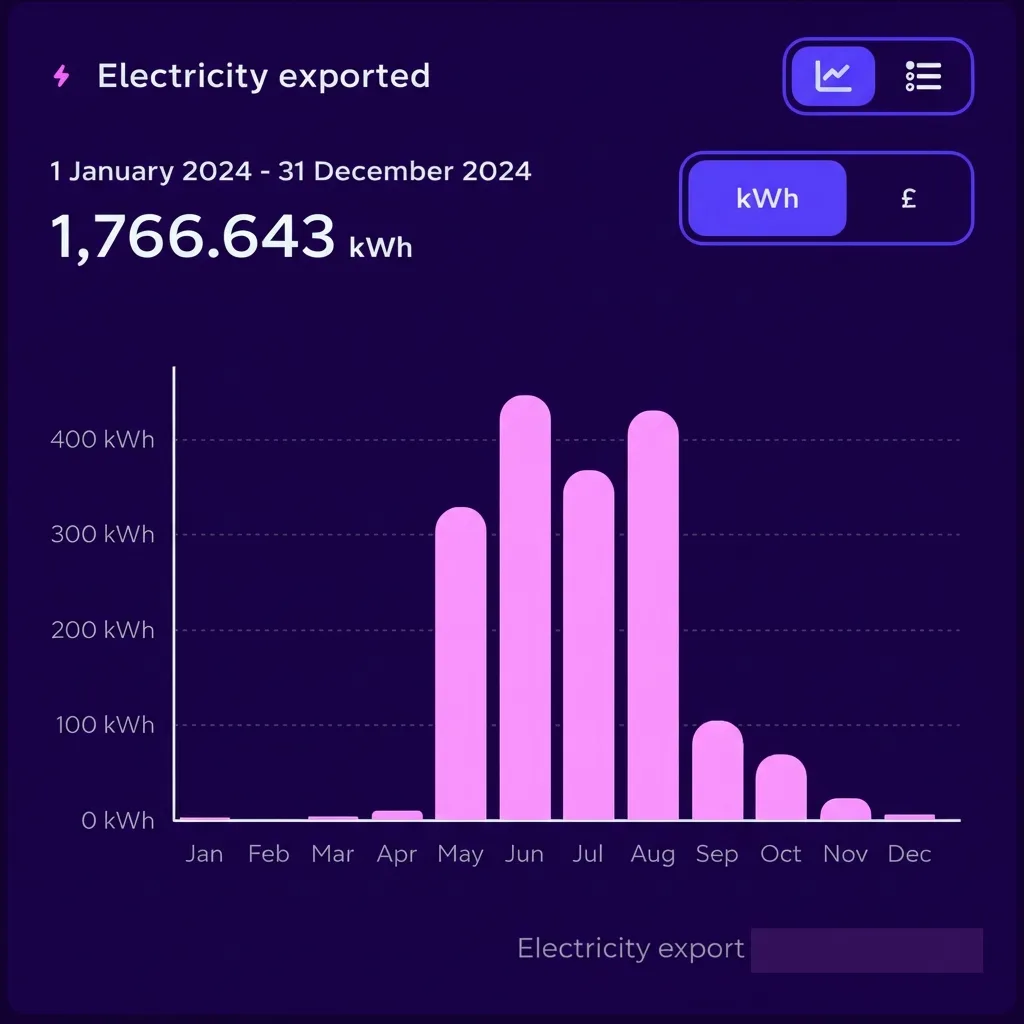
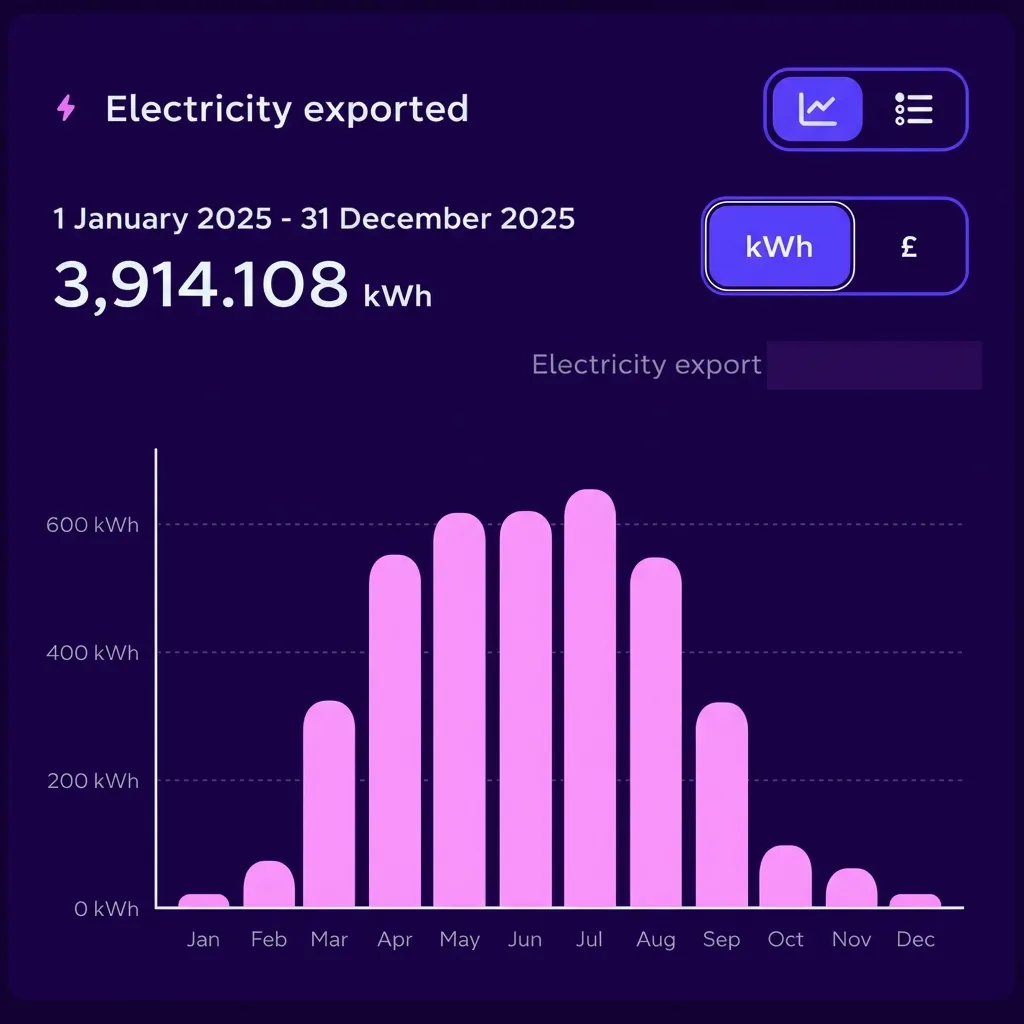
The Results: In 2025, nearly 4,000 kWh was exported, earning approximately £800 in export payments on top of bill savings from efficient battery use. Those are the rates they were actually paid in 2024 and 2025, not current ones: Flux rates have moved since, and Flux itself needs solar, a home battery, an Octopus import and export account and an export MPAN. This isn’t typical, but it shows what’s achievable with smart tariff selection and active system management.
Solar vs. Savings Account: The Investment View
Let’s treat solar as a financial product. If you have £10,500 in savings, how does it compare to a solar+battery system?
Option A: Cash ISA (5%) = £525/year
Option B: Solar + Battery = £743/year (baseline) to £1,000+/year (optimised)
Tax-Free Advantage: Solar savings are effectively tax-free. A 40% taxpayer would need about £1,240 gross to net £743, making solar’s effective return about 12%.
Want to see these numbers in action? Read about my real solar panel payback results after 16 months, including a breakdown of the three income streams that delivered £1,342 in savings from a DIY install.
The Cost of Inaction
| Year | Do Nothing | Solar + Battery |
|---|---|---|
| Start | £0 | -£10,500 |
| Year 5 | -£9,300 | -£6,200 |
| Year 10 | -£20,500 | -£1,100 |
| Year 15 | -£33,000 | +£5,000 |
Real World Proof: 2 Years of Data
Theory is one thing; real-world data is another. I analysed two years of electricity usage data from a UK household with an electric vehicle (EV) to see the impact of solar and battery storage.
The “U-Shape” of Savings
Look at the usage graphs below from Octopus Energy. The pattern is striking: a distinct “U-shape” where grid consumption drops to near-zero during the sunnier months (April to September).
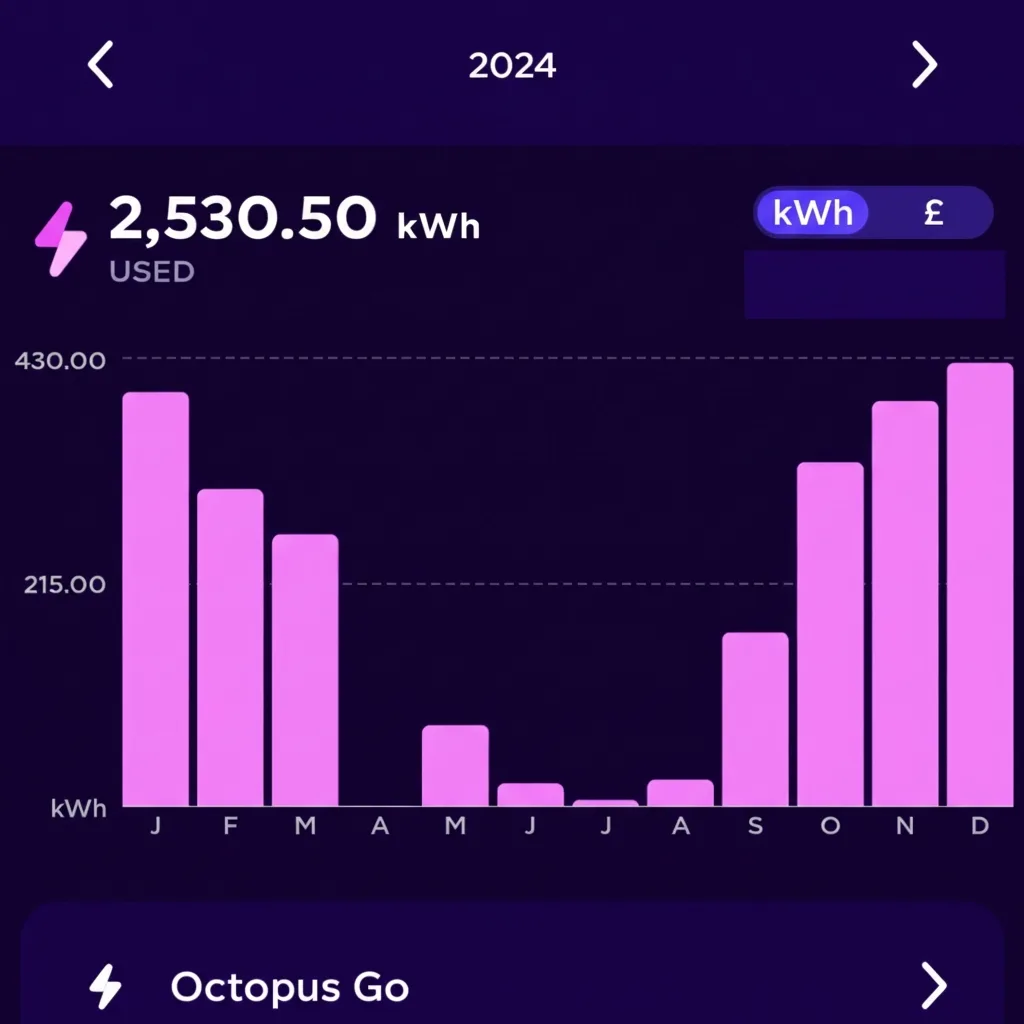
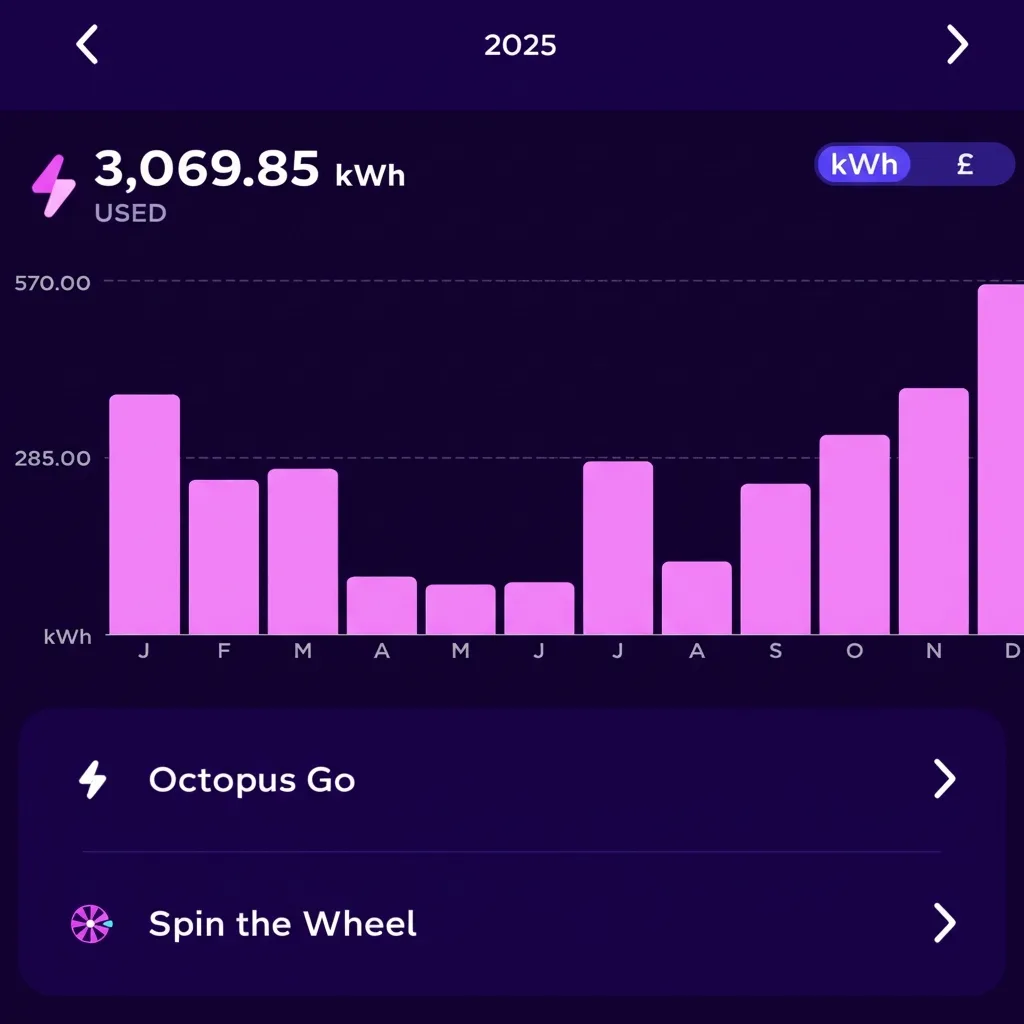
In both 2024 and 2025, grid usage plummeted in late spring and summer. During these months, the solar array covers almost all household needs, plus charging the battery for evening use. The only meaningful grid draw is in deep winter (November-February) when solar generation is naturally lower. Even then, the battery allows charging at cheap off-peak rates to offset expensive peak usage.
Green Mortgages & EPC Ratings: The Property Value Angle
Solar panels deliver financial benefits beyond electricity savings. Two property-related advantages are increasingly relevant in 2026:
EPC Rating Improvement
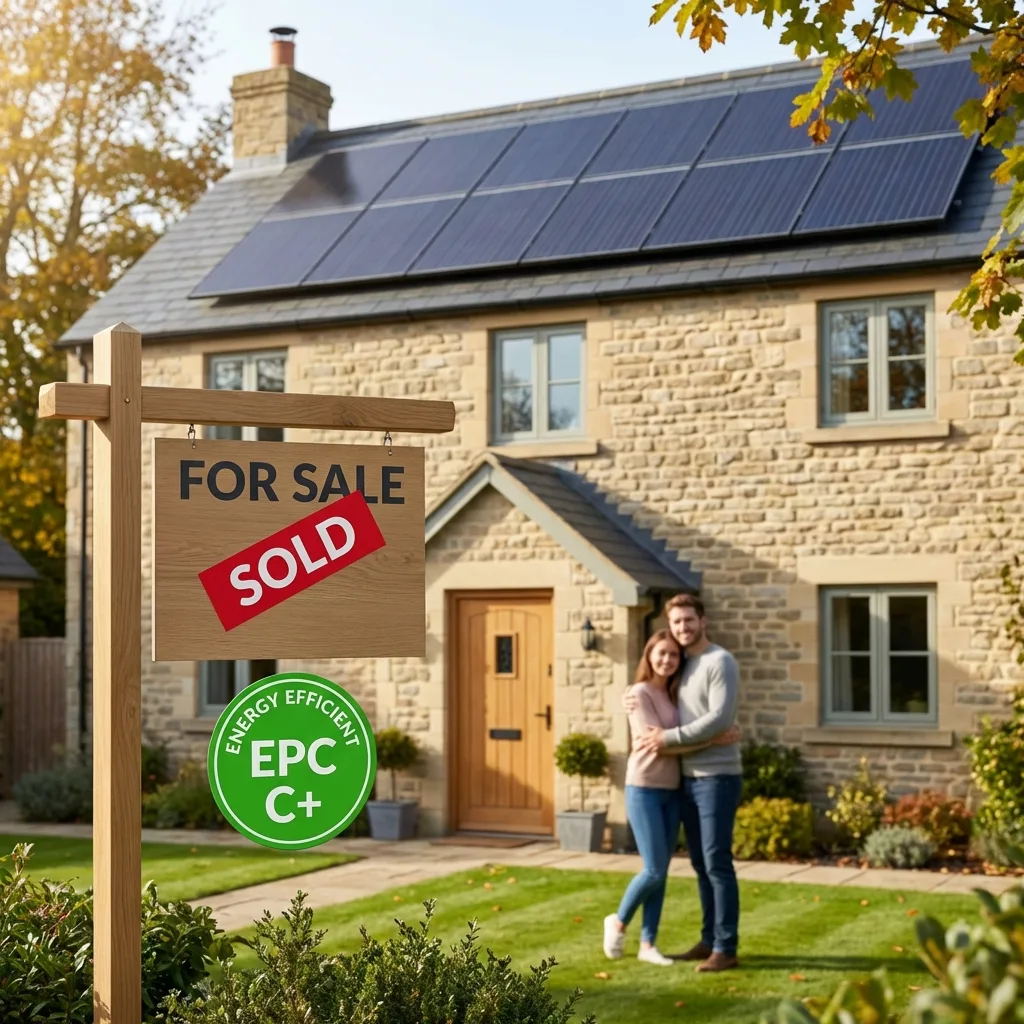
A typical 4kW solar system adds up to 15 points to your Energy Performance Certificate (EPC) rating, potentially moving a property from D to C or C to B. This matters because:
- Rental Regulations: From 2026, all new tenancies in England and Wales require a minimum EPC rating of C. Landlords face penalties up to £30,000 for non-compliance. Solar panels offer a cost-effective path to meeting this requirement.
- Property Value: Homes with higher EPC ratings command a premium. Properties rated A or B sell for at least 14% more than lower-rated equivalents, according to Rightmove analysis. Improving from F/G to C could add nearly 20% to property value.
- Buyer Demand: 71% of homebuyers factor EPC ratings into their decision-making, and many are willing to pay more for energy-efficient homes. Solar panels signal lower running costs and smart energy independence, both increasingly important to buyers.
Direct Property Value Increase
Independent of EPC improvements, some studies report property-value effects in a wide band (Property-value effects are contested and market-specific. Marketing claims sometimes imply multi-thousand-pound sale effects on a £200,000 home; treat that as unproven for your street, not a cash refund. Conservative estimates suggest a 4kW system adds a multi-thousand-pound effect in some sales (not guaranteed), sometimes supporting sale price, but not a guarantee you recover the full install cost on day one.
Properties with solar installations also sell faster. Lower running costs and the appeal of “free” electricity create competitive advantages in the housing market, particularly as energy costs remain a top concern for buyers.
Green Mortgage Access
Major lenders including Barclays, NatWest, Virgin Money, and Nationwide offer green mortgages with preferential rates for energy-efficient properties. These typically require EPC ratings of A or B, which solar panels help achieve. Benefits include:
- Lower interest rates (typically 0.1-0.25% reduction)
- Cashback offers (£500-2,000)
- Higher borrowing limits
For a £200,000 mortgage, a 0.2% rate reduction saves £400 annually, £10,000 over a 25-year term. Combined with solar electricity savings, the total financial benefit becomes substantial.
The entry-level bet: small-scale solar under £1,000
The ROI numbers above assume a 4 kWp installed rooftop system. That is not the only entry point any more. At the small end, an 800W plug-in-style panel kit mounts on a south-facing fence, garden wall or shed end for £350-400 in hardware. One thing to be clear on: plugging that kit into a normal wall socket became legal in Great Britain on 27 August 2026, when SI 2026/848 took effect, but only for a kit that meets the government product specification and appears on the ENA register. Argos listed the first compliant kit at £599 in late August. By 10 October the register held 120 compliant kits from 26 makers, and City Plumbing, Argos, Wilko, Homebase and Very all stocked them. The cheapest was still a one-panel kit at £336, and the cheapest two-panel kit was £444. For anything not on that register, the legal route is still to have the same size of kit hardwired to its own breaker by a registered electrician and notified to your network operator under G98, exactly like a small roof array, which adds roughly £80-150 in electrician cost on top of the hardware.
Realistic numbers for this size of kit: roughly 650-800 kWh/year from 800W at a typical UK south-facing spot, and without a battery, self-consumption in the region of 25-40% since a fence or wall-mounted panel rarely lines up as well with daytime demand as a rooftop array. At the price cap for 1 July to 30 September 2026 (26.11p/kWh), that works out to roughly £40-85 a year in savings, and that is an estimate rather than a guarantee. Against £350-400 in hardware plus £80-150 for the hardwired install, realistic payback runs 5 to 10 years or longer, not two or three. There is no SEG export income available either, since that needs an MCS-certified install a self-fitted kit does not have. The ceiling is lower too: you will not offset a heat pump or an EV with a kit this size. But if the question is “is solar worth starting at all?”, a small hardwired system is a legal, low-cost way to start, even if the payback is slower than a full rooftop install.
When Solar ISN’T Worth It: Honest Limitations
While we frequently debunk common solar myths claiming the technology doesn’t work in the UK, solar panels aren’t a universal solution. Here are scenarios where the ROI truly doesn’t make sense:
Poor Solar Conditions
- Heavy Shading: Trees, tall buildings, or chimneys that shade your roof for hours each day reduce generation by 30-70%. Power optimisers can mitigate partial shading, but severe shading makes solar uneconomical.
- North-Facing Roofs: In the UK, south-facing roofs are optimal. North-facing installations generate 40-50% less electricity, extending payback periods beyond 20 years. East or west-facing roofs are acceptable (70-80% of south-facing output), see our 3-bed east/west roof system guide for specific numbers. If you have a south-facing roof on a larger property, the 4-bed south-facing system guide covers panel counts, inverter sizing, and ROI for bigger homes. North-facing is generally not viable.
- Roof Condition: If your roof needs replacement within 5-10 years, address that first. Removing and reinstalling solar panels costs £1,000-2,000, eroding your ROI.
Low Consumption Households
If your household uses less than 6kWh per day (2,190 kWh annually), you won’t consume enough electricity to justify a 4kW system. Your self-consumption percentage drops, forcing you to export more at unfavourable rates. Consider a smaller 2-3kW system instead, or wait until your consumption increases (e.g., when adding an electric vehicle or heat pump).
Short Ownership Horizon
With payback periods of 13 to 14 years, solar panels require long-term ownership to realise the full benefit. If you’re planning to move within 3-5 years, the property value increase may not fully compensate for installation costs, especially if buyers don’t value solar as highly as expected.
Exception: If a local agent can evidence a solar premium in your market, the investment can still make sense even with shorter ownership.
Structural Limitations
- Listed Buildings: Planning restrictions may prohibit or severely limit solar installations
- Flat Roofs: Require mounting frames that increase costs and may not be structurally suitable
- Asbestos Roofs: Require specialist removal before solar installation, adding £5,000-15,000 to project costs
2026 Government Support and Incentives
Most UK homeowners will not get a cash grant for solar panels. The universal supports are 0% VAT until March 2027 and Smart Export Guarantee income for power you export. Fully funded installs sit in means-tested schemes such as ECO4, England’s Warm Homes: Local Grant, and Nest in Wales, and only if you meet strict eligibility. See our honest UK solar panel grants and incentives guide before budgeting around free solar. Summary of what is real for most households:
0% VAT on Installations
The government’s 0% VAT rate on energy-saving materials, including solar panels and battery storage, remains in effect until March 2027. This reduces installation costs by 20% compared to the standard VAT rate, saving £1,200-1,600 on a typical £6,000-8,000 system.
Smart Export Guarantee (SEG)
The SEG requires larger energy suppliers to pay for surplus electricity exported to the grid. Rates range from 3p to 30p/kWh depending on supplier:
- Standard rates: 3-5p/kWh (most suppliers)
- Competitive rates: 15-20p/kWh, but these are almost always reserved for the supplier’s own import customers, so the headline number is not open to everyone
- Premium rates: Octopus Flux pays its highest rate only in the 16:00 to 19:00 peak window, and only if you have solar, a home battery, an Octopus import and export account and an export MPAN. The peak rate varies by region. Intelligent Flux is paused and cannot be signed up for as of 24 July 2026.
Eligibility requires MCS certification and a smart meter capable of half-hourly readings. See our Octopus Energy Export Tariffs guide for detailed comparisons.
ECO4 Scheme
The Energy Company Obligation (ECO4) scheme has funded solar for some low-income households and properties with EPC ratings of D or below. Where still open, eligible homeowners can receive substantial or fully funded measures, but places are limited and many quotes never qualify. Do not assume free solar; check current supplier schemes and the grants guide before you plan around ECO4.
Eligibility criteria include receiving certain benefits (Universal Credit, Pension Credit, etc.) or having a household income below £31,000. Check with your energy supplier or visit the official ECO4 guidance for details.
Next Steps: Making Your Decision
If you’ve determined solar makes financial sense for your situation, here’s your action plan:
1. Assess Your Roof and Consumption
- Review your electricity bills to determine annual consumption
- Check roof orientation (south-facing is optimal, east/west acceptable). See our system guides by roof type for sizing recommendations
- Identify potential shading issues (trees, buildings, chimneys)
- Verify roof condition and age (should last 10+ years)
2. Get MCS-Certified Quotes
Only use MCS-certified installers. MCS certification is required for:
- SEG payment eligibility
- Manufacturer warranty validity
- Building regulations compliance
Get at least three quotes to compare pricing, equipment quality, and warranty terms. Expect quotes to include:
Compare real panel models, prices, and specs in our solar panel directory before you get quotes.
- Panel specifications (wattage, efficiency, warranty)
- Inverter type (string, micro, or hybrid)
- Installation timeline and scaffolding requirements
- Projected annual generation and savings
3. Consider Battery Storage
As demonstrated in our ROI analysis, battery storage improves returns by lifting self-consumption from 40-50% to 70-80%. While adding £3,000-4,500 to upfront costs, batteries deliver:
- Higher annual savings (£218+ additional per year)
- Backup power during outages
- Time-of-use tariff optimisation
- Future-proofing for EV charging and heat pumps
Read the battery storage guide for detailed analysis and product recommendations.
4. Explore Financing Options
If upfront costs are prohibitive, consider:
- Green loans: Interest-free or low-interest loans specifically for energy efficiency improvements
- Home improvement loans: Personal loans with competitive rates for solar installations
- Remortgaging: Releasing equity to fund solar installation (only if you’re already remortgaging)
Ensure loan interest rates don’t exceed your annual savings percentage. For example, if your system delivers a 7.5% annual return (£525 on £7,000), don’t accept loans above 7% APR.
5. Plan for Future Expansion
Even if you’re starting with solar-only, choose a hybrid inverter that supports battery addition later. This future-proofs your investment and allows you to add storage when prices drop further or your budget allows.
Similarly, if you’re planning to add an electric vehicle or heat pump in the next 5 years, size your system to accommodate that increased consumption. It’s more cost-effective to install a larger system initially than to expand later.
Worked Examples for Every Roof Type
ROI figures only land when you see them on a specific house. Five worked examples with real panel counts, inverter models, battery sizing, and payback numbers:
- 2-bed south-facing. The simplest case.
- 3-bed east/west. Better demand-curve match than south for most families.
- 3-bed north-facing. When it pays back and when to skip it.
- 4-bed south-facing. The premium case.
- 4-bed NW/SE split. Dual-MPPT, asymmetric loading.
Solar Payback FAQs
How long do solar panels take to pay for themselves in the UK?
About 13 years for a typical installed 4kW system at the July to September 2026 cap rate. High daytime usage, a battery, or a strong export tariff can pull that in. A DIY install changes the equation entirely: roughly half the upfront cost means payback in 6-7 years. My own £9,000 DIY system returned £1,342 in its first 16 months.
What is the payback period for a 4kW solar system?
About 13.3 years: £7,000 installed, returning £525 a year (£439 in avoided grid electricity plus £86 in export at a conservative 5p/kWh). Your roof’s pitch and direction change the generation side of that sum, so check yours with the solar panel angle calculator before trusting any quote’s projection.
Are solar panels worth it on an east/west roof?
Yes, with payback around 2-3 years longer than a south-facing roof. East/west panels produce 70-80% of south-facing output, but generation lands in the morning and evening when most households actually use power, so a higher share gets self-consumed at 26.11p rather than exported at 5p. The east/west system guide has the full breakdown.
What are the main advantages and disadvantages of solar panels?
Advantages: £525-745 a year off a typical bill, electricity at 4-5p/kWh over the system’s life, possible multi-thousand-pound sale effect in some markets, not a fixed uplift, and a better EPC rating. Disadvantages: £6,000-8,000 upfront, a 13 to 14 year wait to break even, weak returns on shaded or north-facing roofs, and scaffolding or roof work disruption during install. The limitations section above covers the deal-breakers in detail.
Are solar panels worth it if I might move house?
Only if you expect to stay 5+ years, or you are confident of recovering the cost in the sale price. A 4kW system adds a multi-thousand-pound effect in some sales (not guaranteed) to a typical home’s value, which roughly covers the install cost, but that premium is not guaranteed in every local market. Inside 3 years, the maths rarely works.
Conclusion: The 2026 Verdict
Are solar panels worth it in 2026? For most UK homeowners with suitable roofs and average consumption, yes, emphatically.
High electricity prices (26.11p/kWh on the cap to 30 September 2026), competitive installation costs (£6,000-8,000 for 4kW), 0% VAT and better hardware all point the same way. Payback periods of 13 to 14 years deliver 8-9 years of much lower effective unit cost after payback (standing charges still due), a value on the order of £4,600-5,800 over that period in the example model in total net savings, plus property value increases of a multi-thousand-pound effect in some sales (not guaranteed).
Adding battery storage lifts self-consumption from 40-50% to 70-80%, opens up time-of-use tariff arbitrage, and keeps the lights on through power cuts. The additional £3,500 investment delivers £218+ in extra annual savings and positions your home for future electrification (EVs, heat pumps).
The 244,000+ households that installed solar in 2025 were not chasing environmental virtue. They were doing the same sums you have just read. With energy prices remaining structurally high and volatile, solar panels offer the only way to lock in 4-5p/kWh electricity costs for the next 22 years.
The question isn’t whether solar makes sense in 2026. It’s whether you can afford to keep paying 26.11p/kWh when you could be paying 3-5p/kWh instead.
Ready to take the next step? Explore our guides on choosing the right inverter, battery storage options, and DIY installation to maximise your savings.
