
Most of what you have heard about home solar is out of date. Plug-in panels have been legal to plug into a normal socket in Great Britain since 27 August 2026, modern panels produce real power even on grey days, and a self-installed system can pay back in 4-9 years. Here are 8 common myths, tested against current UK data and regulations.
Misconceptions from 5 years ago still circulate. If you’re wondering why so many people hesitate, see our roundup of the top reasons homeowners avoid solar.
Can you plug solar panels into a socket in the UK?
You can, since 27 August 2026, if the kit is on the register. The law (SI 2026/848) lets a plug-in kit of up to 800W that complies with the government specification use a normal socket in England, Wales and Scotland. On 10 October 2026 the ENA register listed 120 compliant kits, and City Plumbing, Argos, Wilko, Homebase and Very all sell them, from £336. Two catches survive. Most Amazon kits with a plug on the end are not on the register, so they have no socket route. And not every home is suitable: a Type AC RCD on the socket circuit rules a home out until an electrician changes it, as the home suitability check explains. Most of our neighbours got there first: Germany alone has over 1.2 million registered plug-in systems, and the UK rules copy its model. The April 2026 wiring update was mainly about home batteries, not plug-in solar. For anything not on the register, the route is still a system hardwired by a registered electrician and notified to your network operator.
I wrote a full breakdown of what the new rules mean, the key dates, and whether you should buy now: Plug-in Solar Panels UK: What the New Rules Mean for You (2026).
Do solar panels produce enough energy in the UK?
Claim: Solar panels do not produce enough energy to matter in the UK.
Evidence: Modern residential modules in the panel directory are typically 370-450W nameplate. PVGIS-class UK yields of roughly 350-420 kWh per year per panel (orientation dependent) are routine for south-facing installs.
Number: about 8 average panels (~3.2-3.6 kWp) can generate on the order of a typical 3-bed annual electricity use when oriented reasonably well. My own system produced 3,324.8 kWh in the first 9 months of 2024 with a mid-year expansion.
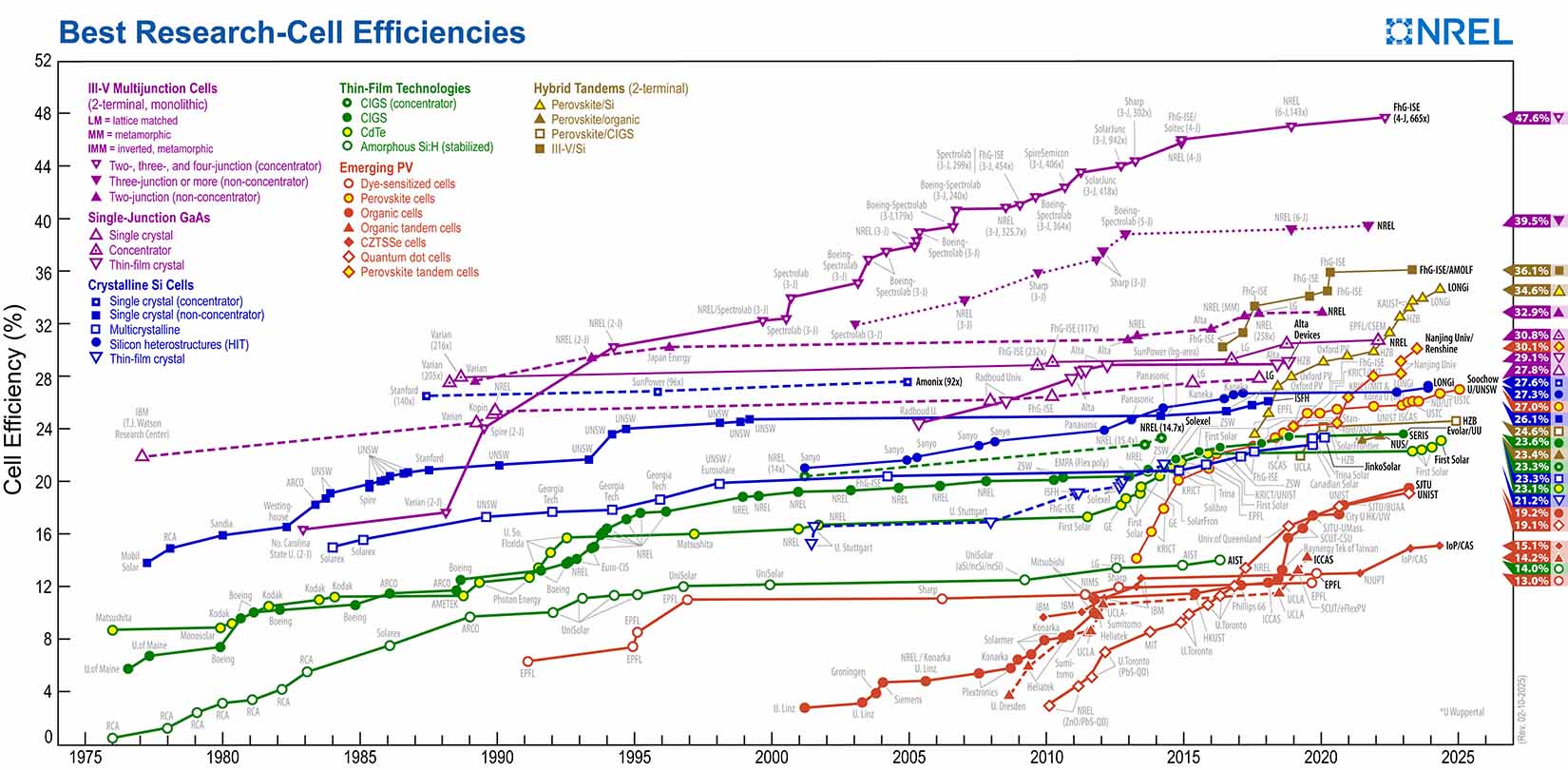
Residential module efficiency moved from about 15% in 2010 to over 20% in the 2020s (NREL). My metered system: 3,324.8 kWh in the first 9 months of 2024 after expanding mid-year with a gazebo array.
Do solar panels work on cloudy days?
Claim: Solar panels only work on perfectly sunny days.
Evidence: Panels produce from diffuse light. Cloud reduces output; it does not switch them off. Germany, often cloudier than much of the UK, generated around 12% of its electricity from solar in 2023 (Fraunhofer ISE).
Number: on cloudy days, output is often about 10-25% of clear-sky peak for the same array, not zero. That still moves the daily meter if your array is sized sensibly.
For location-specific monthly yield, see solar panel output by month in the UK rather than a national rule of thumb.
Do you lose power at night with solar panels?
Claim: Solar homes go dark when the sun is not shining.
Evidence: Most residential systems are grid-tied. When panels under-produce, the home draws from the grid automatically. A battery can cover evening loads; SEG pays for daytime surplus export.
Number: export rates matter (often 4-15p/kWh statutory or smart tariffs higher); self-consumption at import rates (around 24-35p) is usually the larger saving.
Do you need to be home in the day to benefit from solar?
This myth stems from a misunderstanding about how solar energy is used and stored. While it’s true that solar panels generate electricity during daylight hours, you don’t need to be home to use that energy effectively. There are two main ways to maximize your solar benefits, regardless of your daily schedule:
Smart Export Guarantee (SEG)
In the UK, the Smart Export Guarantee (SEG) means that when your panels produce more electricity than you’re using, the surplus is exported to the grid and your energy supplier pays you per kWh. Those payments reduce your net bill. You don’t need to be home for this to work.
Battery Storage
Modern solar systems can be equipped with battery storage solutions. These batteries store excess energy produced during the day, allowing you to use it during peak evening hours or when your panels aren’t generating power. While batteries add to the initial cost of a solar system, they’ve become much more affordable in recent years and can significantly increase your energy independence.
How long do solar panels last?
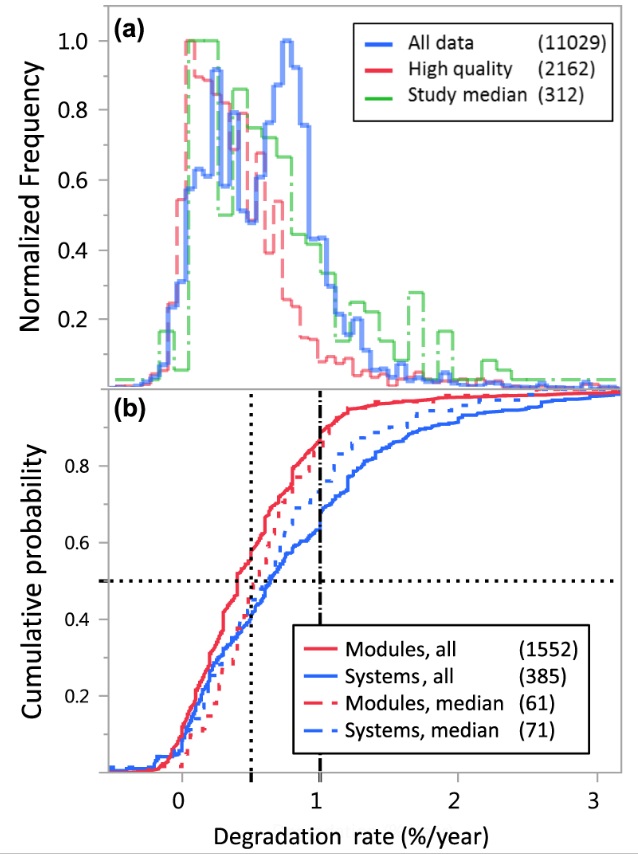
Most modern solar panels come with a 25-year performance warranty. The leading manufacturers now guarantee 87-90% of original capacity at year 25, with annual degradation running at roughly 0.4% per year (NREL, 2022 meta-analysis). In practice, many panels continue producing well beyond 30 years. The 75-80% figure you may have read dates from older, pre-2015 panel generations.
Are solar panels bad for your health or the environment?
One of the most persistent yet unfounded myths about solar energy is that it poses risks to human health and the environment. Let’s address these concerns:
Electromagnetic Radiation
Some people worry that solar panels emit harmful electromagnetic radiation. In reality, solar panels produce very low levels of electromagnetic fields, similar to or less than many common household appliances. These levels are well within safety guidelines and pose no known health risks.
Toxic Materials
While it’s true that solar panels contain some potentially harmful materials like lead and cadmium, these are safely encased within the panels. During normal operation, there’s no risk of exposure. The industry has sharply reduced cadmium use in recent years, and EU WEEE regulations now require manufacturers to fund panel recycling at end of life.
Environmental Impact
Far from being harmful, solar energy significantly reduces environmental impact compared to fossil fuels. Solar panels produce clean, renewable energy without emitting greenhouse gases or other pollutants during operation. While there are some environmental costs associated with manufacturing and disposal, these are far outweighed by the environmental benefits over the panel’s lifetime.
End-of-Life Concerns
Panel recycling is expanding under EU WEEE-style producer responsibility; glass, aluminium frames, and much of the semiconductor material can be recovered. Rooftop systems use existing buildings, so they do not create new greenfield land use. Large ground farms are a different planning question and should not be confused with a domestic roof array.
Do solar panels need a huge upfront investment?
This was true in 2015. It is not true in 2026. A proper 4-5 kWp rooftop install still costs £5,000+, but that is no longer the only entry point. Since 27 August 2026 you can plug a small kit into a normal socket in Great Britain, if the exact model is listed Compliant on the ENA register. On 10 October 2026 the cheapest listed plug-in solar kit I found was still £336 for one panel, and a two-panel kit was £444. Output is capped at 800W AC, and you tell your network operator within 28 days. A bigger or unlisted kit still takes the old route: hardwired to its own breaker by a registered electrician and notified to your DNO under G98. Annual yield 800-1,000 kWh per kWp at 28° south-facing in central England per PVGIS. Realistic payback on a listed kit is 5 to 14 years without a battery, longer than a full rooftop system, but a far smaller cheque to write.
The old “solar is expensive to start” framing is doing real damage now because it keeps people waiting for savings they could have been making from a £336 plug-in kit. The answer to “should I wait until I can afford a proper system” is increasingly: no, start at Level 1, compound from there. See the solar progression for where plug-in sits in the ladder.
See These Principles on a Real Roof
The myths above show up clearest on specific roofs. Three contrast cases:
- 2-bed south-facing. The “easy” scenario. You will still see the “south is always right, overbuild the array” myth break down.
- 3-bed north-facing. Debunks the “north roofs are pointless” myth with actual PVGIS numbers and the scenarios where it earns out.
- 4-bed NW/SE split. The diffuse-light myth in practice. Three years of metered data showing two orientations producing nearly identical output on overcast UK days.
Conclusion
I’ve run my own system for over a year and a half now. Most of the concerns I had before installing turned out to be based on outdated information. The panels work on grey days, the SEG pays for export, and degradation is far slower than the old headlines suggested. If you’re weighing up whether solar makes sense for your home, the numbers are what matter. Start with whether solar panels are worth it in 2026.
