Solar Energy Concepts

Plug-in Solar Buying Guide: What to Look For Before You Buy
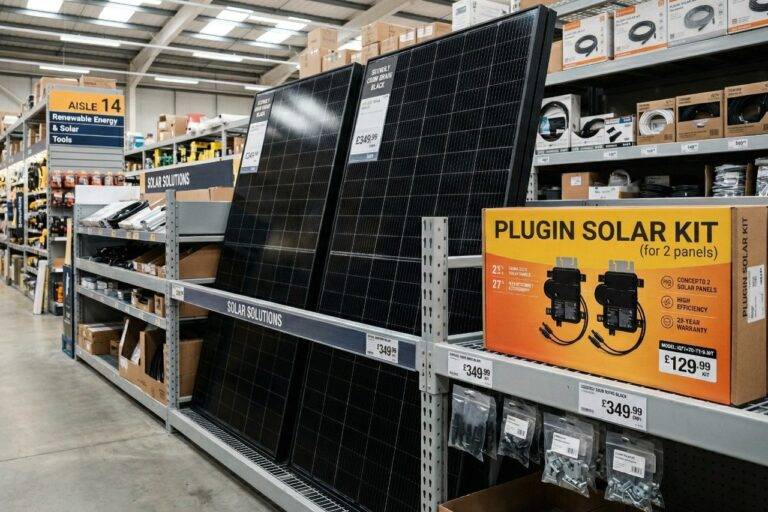
- A £400 plug-in solar kit? You can build one for under £300 — two panels + G98-verified inverter, payback under 2 years.
- Use the kit builder to price your own system — only shows inverters confirmed on the ENA Type Test Register.
- Aldi and Lidl kits are coming — but you can build the same thing cheaper from UK suppliers today.
- Adding a £300 battery doubles your savings — capture 90% of generation instead of 40%.

Garden Solar Panels UK: Shed, Garage, and Plug-in Options (2026)
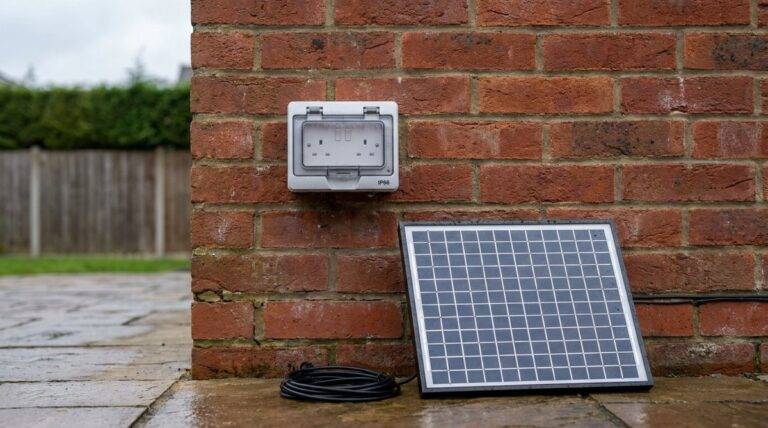
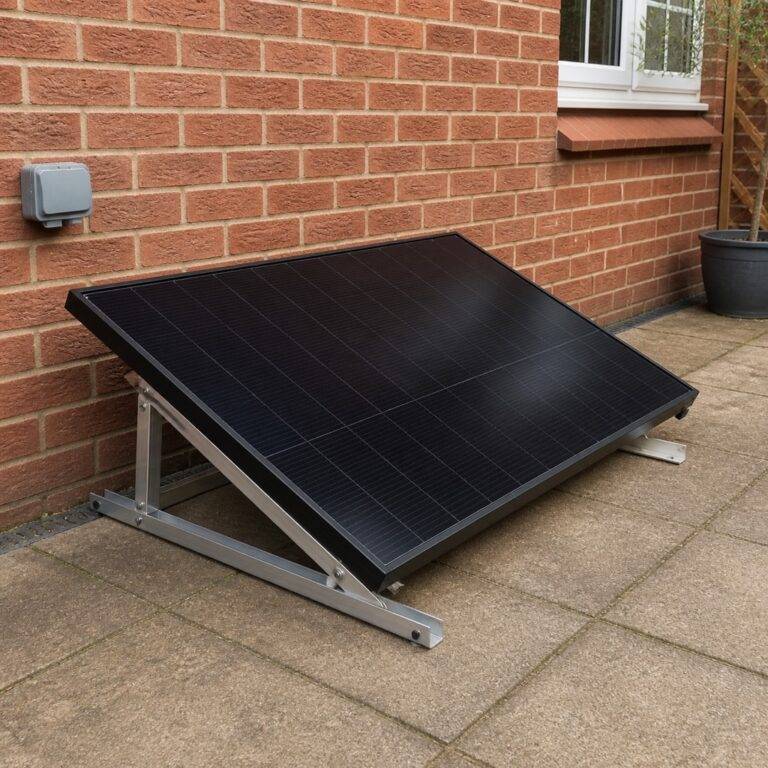
- Plug-in solar is the simplest shed option — one or two panels, a microinverter, plug into a socket. £300-500, ROI in 2-4 years.
- Full DIY gives more power — 4 panels + string inverter on a garage roof can cover your home base load.
- With a battery, ROI drops to under 3 years — store daytime generation for evening use.
- Part P applies: wiring a detached building still requires building regulations notification.
Plug-in Solar Panels UK: What the New Rules Mean for You (2026)
- Plug-in solar is confirmed for the UK — the government announced legalisation in March 2026. Key dates: April 15 (wiring rules), July (product standard), October (transition ends).
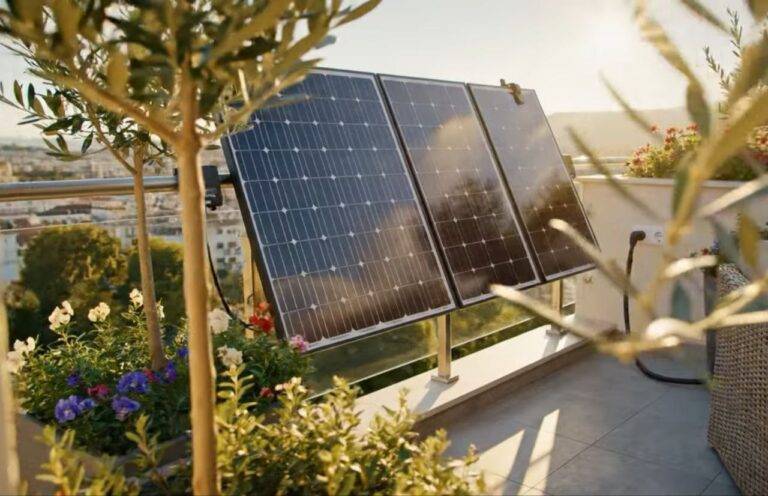
- Balcony solar = plug-in solar — same technology, same rules. The UK term is plug-in solar; Europe calls it Balkonkraftwerk.
- 800W is the expected limit — the UK is expected to follow Europe’s 800W cap, but the BSI product standard is not yet finalised. How the three components work together.
- German kits are cheaper right now — but prices are rising after the China export rebate cut. What to check before buying.
- Vertical panels produce ~70% of optimal — placement and tilt matter more than brand. How angle affects your output.
- Use this guide before buying so your kit remains compliant and export-ready when the rules land.

Solar Panel Optimisers UK: Tigo vs SolarEdge vs Microinverters (2026)
- Three ways to optimise — DC optimisers (Tigo, SolarEdge) and microinverters (Enphase, Hoymiles) each suit different roofs and budgets.
- On clean unshaded roofs, optimisers may not help — independent research shows they can slightly reduce output when there is no shading to recover.
- Microinverters are a serious alternative — for complex or heavily shaded roofs, they often match or beat optimiser setups.
- Choose by your situation — retrofit = Tigo, new SolarEdge system = SolarEdge, complex new build = compare microinverter quotes.

Fogstar 15kWh Battery: 3-Year Owner’s Review
- ~10% capacity loss after 3 years and 600 cycles. Well within the 4,000-cycle warranty. At this rate, 80%+ capacity at the 10-year mark.
- You can add a pack later, even at different cycle count. The BMS recalibrates. I did it, and the readings have since converged.
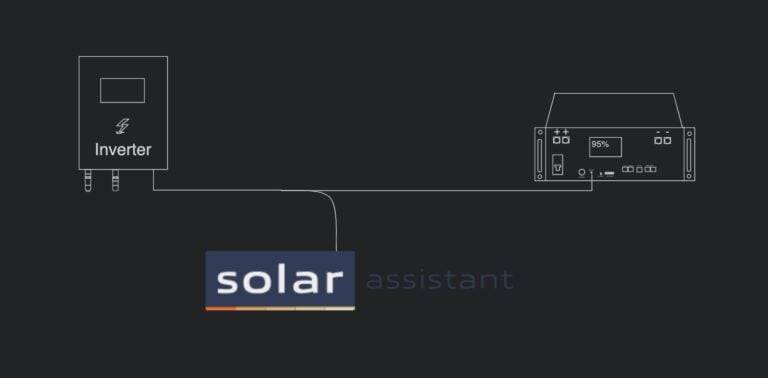
- How I charge: Octopus Go + Solar Assistant automation. Saves £1,668/year. The setup details are in this article.
- Honest drawbacks included. Winter balancing drift, BMS firmware update, and how the fix works.

Octopus Export Tariffs: Rates, Comparison, and Which to Choose (2026)
- Outgoing Fixed (12p/kWh) is simplest and suits most solar-only homes.
- Agile Outgoing can outperform Fixed if you shift export into high-price windows.
- Flux (28.60p peak export) is best for battery owners who can discharge during 4–7pm.

How Do Plug-in Solar Panels Work? Simple Guide for UK Homes
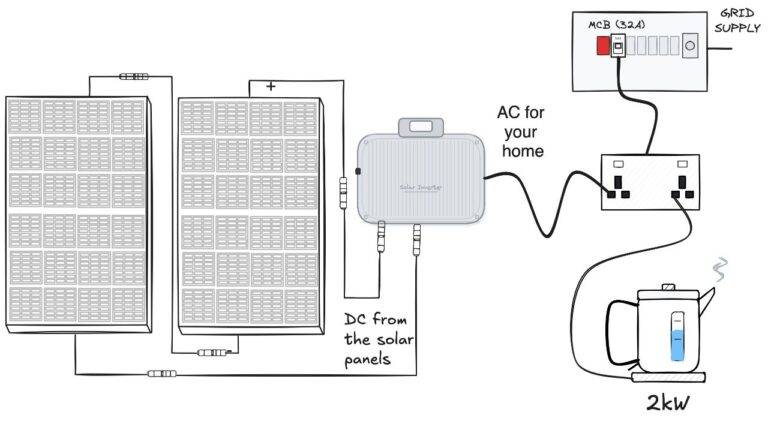
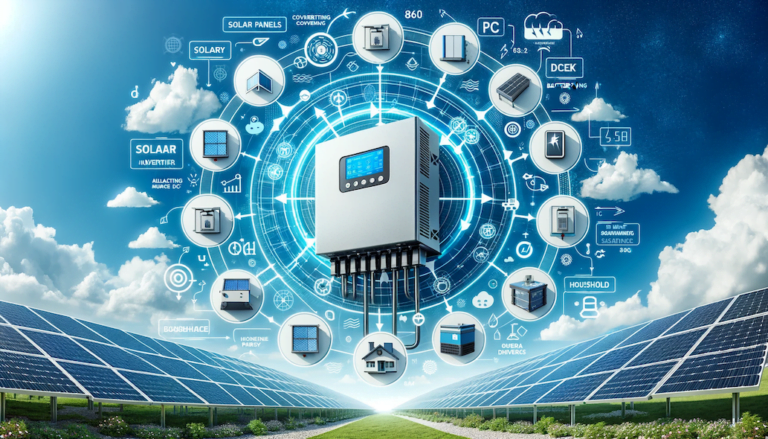
- Plug-in solar is simple in concept: panels generate DC, microinverter converts to AC, home uses it first.
- Safety and compliance still matter even for small systems.
- Understanding the flow helps avoid bad purchases and unrealistic savings expectations.

Home Battery Storage Without Solar UK: Is It Worth It? (2026)
- Use the calculator to estimate your numbers based on your setup.
- Yes, it’s worth it. A 16.1kWh battery on Octopus Go pays for itself in 3.2 years — no solar panels needed.
- Save £5,200–£7,700+ over 16 years using cheap overnight electricity and discharging during peak hours.
- System cost ~£3,300 (battery + inverter + electrician). 0% VAT until March 2027.
- New in April 2026: BS 7671 Amendment 4 introduces Chapter 702 — the first UK wiring standard for home batteries.
- Best tariff: Octopus Go (7.5p overnight → ~28.5p peak = 21p spread). Start with battery, add solar later.
Octopus Zero Bills vs DIY Solar
- Zero Bills is not free energy. The hardware cost is paid upfront through the home price or retrofit finance.
- Octopus uses approved premium hardware. That makes it a different comparison to most budget DIY builds.
- You trade control for simplicity. Octopus manages optimisation; DIY gives you full manual control.
- Best fit for new builds. Retrofit can still work, but the economics are less clear.
Solar Panel Prices UK 2026: What They Cost, Where to Buy, and What’s Changing
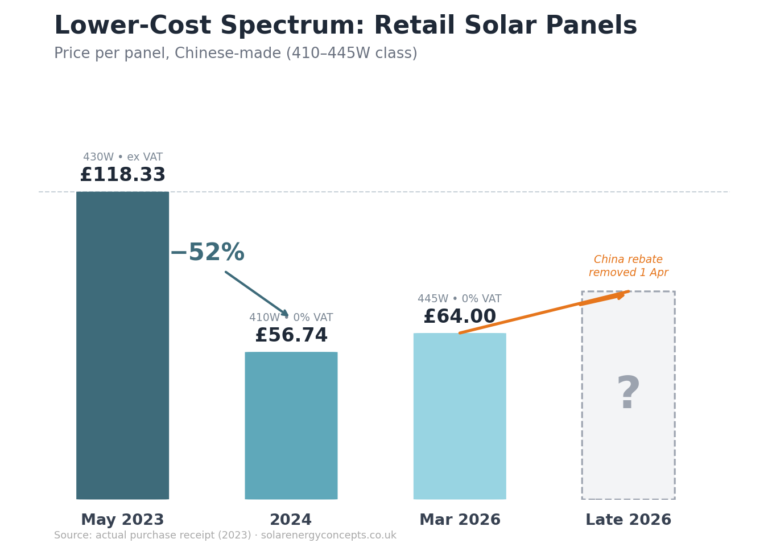
- Panel prices are lower than most people expect — around £0.50/W to £0.70/W for a quality panel.
- Price per watt is only part of it — warranties, degradation, and supplier reliability matter too.
- Timing matters in 2026 — the China export rebate ends April 1, which will push costs up.
- Buy on value, not hype — this guide shows you how.

Solar Panels for a 4-Bedroom House with South-Facing Roof
- South-facing roofs deliver the highest annual yield for typical UK domestic systems.
- Midday production peaks can exceed daytime demand, so storage/export strategy is key.
- This guide gives practical system sizing for a 4-bed home with realistic budget ranges.

Solar Panels for a 3-Bedroom House with East/West Roof
- East/west roofs produce less annual energy than south, but often match household demand better.
- Broader morning/evening output can improve self-use and reduce import reliance.
- This guide provides realistic sizing and expectations for a 3-bed east/west setup.

Solar Panels for a 2-Bedroom House with South-Facing Roof
- A south-facing 2-bed setup can deliver strong annual yield with relatively simple design choices.
- Right-sizing inverter and battery is crucial to avoid overbuild or clipped value.
- This guide provides realistic component ranges and expected performance outcomes.

Solar Panels for a 4-Bedroom House with NW/SE Split Roof
- NW/SE split roofs can still perform well in UK diffuse-light conditions.
- Generation profile is flatter than south-facing, which can improve usable energy.
- This guide maps practical system design for a 4-bed split-roof scenario.

Solar Panels for a 3-Bedroom House with North-Facing Roof
- North-facing roofs can still work in the UK when system design is realistic and expectations are set correctly.
- Annual yield is lower than south-facing, but diffuse light reduces the gap versus common assumptions.
- This guide gives practical sizing and ROI framing for a 3-bed north-facing setup.

UK Solar Panel Grants and Incentives 2026: Complete Guide
- Most UK support is now indirect (VAT relief, financing, and regional schemes), not broad cash grants.
- Eligibility and timing are the real edge — many schemes are narrow and change frequently.
- This guide maps current options so you can avoid dead programs and focus on live incentives.

Take Total Control of Your Sunsynk With Solar Assistant Rules
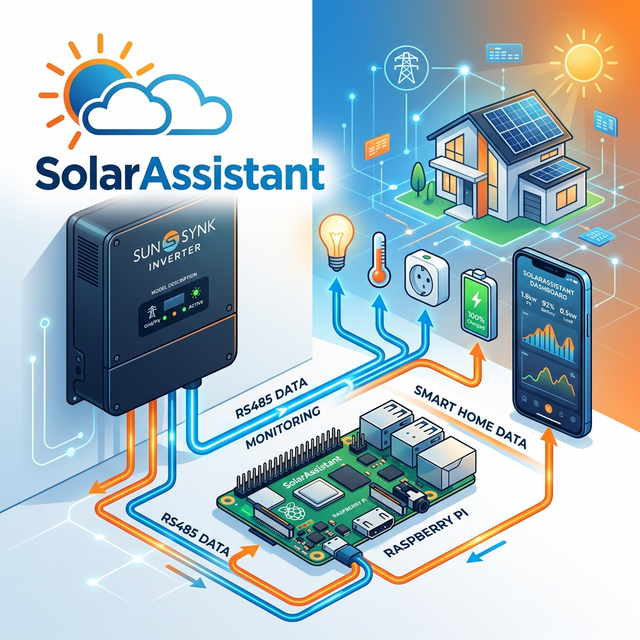
- Solar Assistant + Sunsynk automation: Schedule charge and discharge current limits your inverter’s native app can’t handle.
- Force solar export: Drop Max Charge Current to 2A during the day so surplus solar goes straight to the grid on Octopus Go.
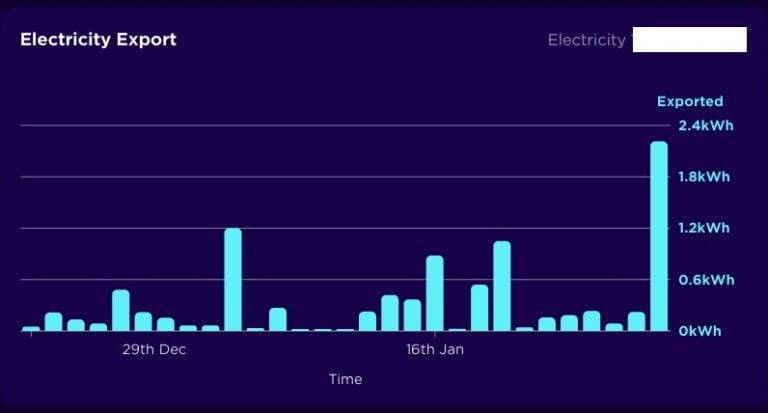
- Real UK export data: These rules helped double grid export from 1,766 kWh to 3,914 kWh year-on-year.
- Crash-proof your setup: Never set amps to zero. Solar Assistant can crash and leave values stuck.
- Home Assistant solar integration: Bridge Sunsynk data via MQTT for Octopus Agile pricing, solar forecasts, and EV diversion.

Unlock Hidden Power: How Your Sunsynk 3.6 Inverter Can Process Double the Solar Energy
- The Sunsynk 3.6kW can accept higher DC input than many owners realise, within limits.
- Correct design and settings matter — otherwise potential yield is left on the table.
- This guide explains practical configuration for better generation and export outcomes.

Solar Panel Payback Period: Real Results From a UK DIY Install
- Use the calculator to estimate your numbers based on your setup.
- Real-world return: £2,729 recovered in ~2.5 years from a £9,000 DIY system.
- 2025 outcome: £1,668 total benefit from bill reduction, arbitrage, and export.
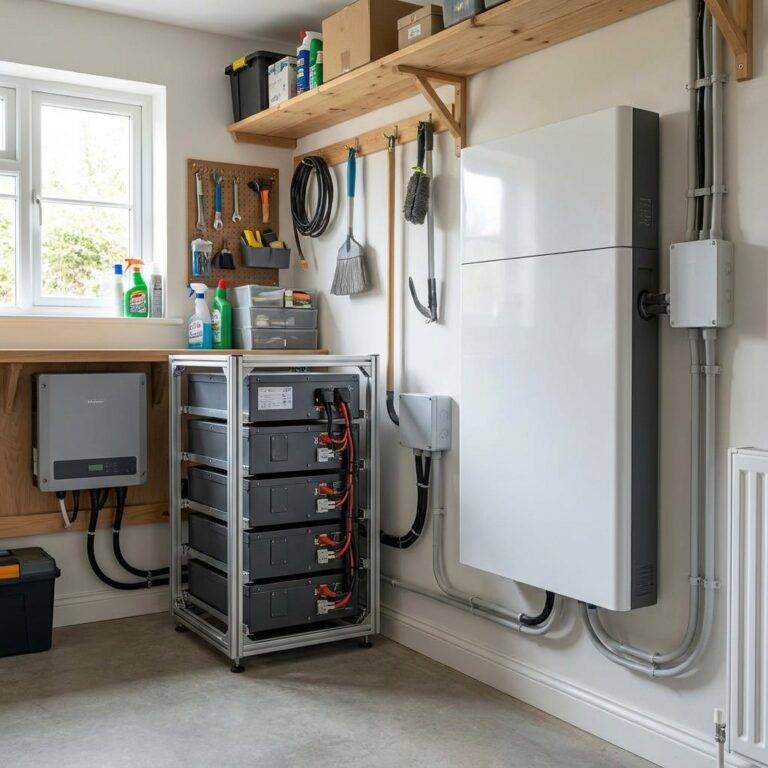
- Payback trajectory remains attractive, with newer component pricing improving today’s economics.
DNO Registration for DIY Solar UK: G98 and G99 Step-by-Step (2026)
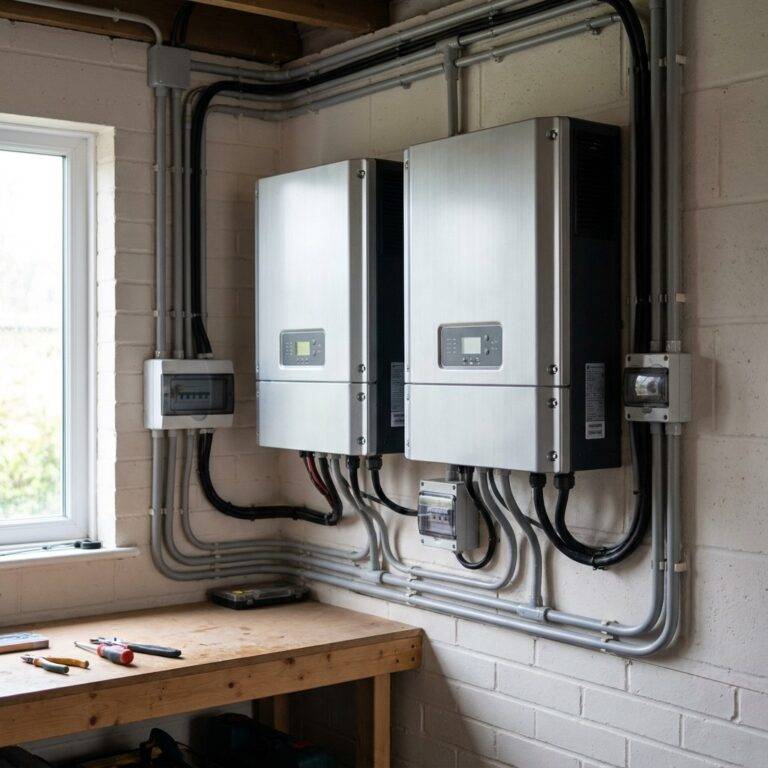
- G98 and G99 have different approval paths — getting this wrong causes avoidable delays.
- This guide shows the homeowner process step by step with practical documentation tips.
- Correct registration protects future export options and reduces compliance risk.

Are Solar Panels Worth It in 2026? (New Price Cap & ROI Breakdown)
- For many UK homes in 2026, solar still pays — especially with high self-consumption.
- Payback varies by roof, usage, and tariff; bad assumptions can distort ROI.
- Battery + tariff optimisation often beats panel-only setups on total returns.

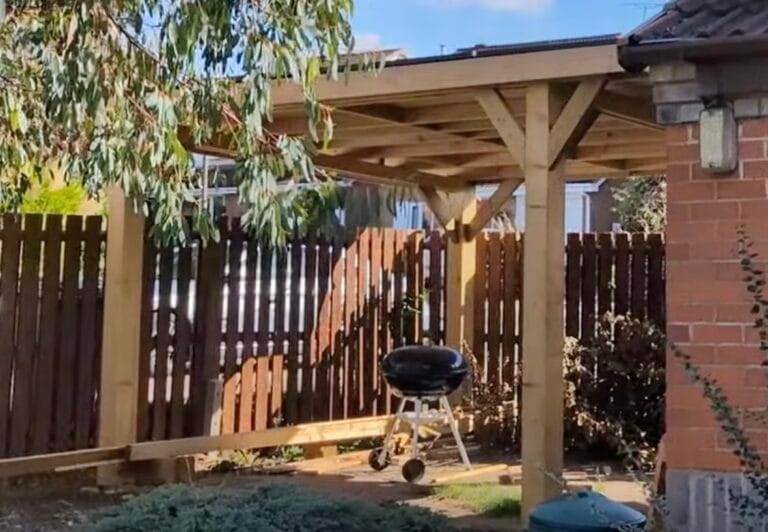
Solar Expansion With Added Value: DIY Solar Gazebo
- A solar gazebo doubles as a garden structure and a generation asset — useful if roof space is limited or orientation is poor.
- DIY build cost: timber frame + panels + microinverter from around £1,500.
- Orientation flexibility: a freestanding structure can be positioned for optimal south-facing tilt.

The Top 5 Reasons of Homeowners Avoiding Solar.

Amazing Energy Savings Results Since Installing Home Solar.
- Solar changes behaviour, not just bills — timing appliance use unlocks bigger savings.
- Understanding your generation curve is critical for self-consumption and battery planning.
- Small routine changes compound into meaningful annual cost reductions.

DIY Solar Installation: A Journey to Energy Independence
Legal Disclaimer
Solar Energy Concepts: Legal Disclaimer Last updated: October 27, 2023 Professional Disclaimer The Solar Energy Concepts website is for informational purposes only — Electricity kills! We advise you seek qualified professionals for electrical work! We offer educational content regarding solar energy, but it’s imperative to recognize that improper installation or mishandling of electrical components can […]
Contact Us
Have a question about solar panels, battery storage, or your DIY solar project? We’d love to hear from you. Whether you’re planning your first installation or looking for advice on optimising an existing system, get in touch and we’ll do our best to help. Get in Touch Email: hello@solarenergyconcepts.co.uk Facebook: Solar Energy Concepts on Facebook […]

What Changes When You Install Home Solar
- Solar changes how you use energy — you shift heavy loads (washing, cooking) to daytime when generation is free.
- Real savings from behaviour change on top of the system’s automatic savings.
- Battery makes it effortless — without one, you are constantly timing appliances around the sun.

Solar Energy and Heat Pumps: A Strategic Home Investment

Solar Panel Optimisers: How They Solve Shading and Mixed Angles (2026 UK Guide)
- Optimisers are most useful on imperfect roofs with shading, mismatch, or complex layouts.
- On clean unshaded arrays, gains may be small relative to added hardware cost.
- Use measured yield impact and system complexity to decide if they are worth it.
Solar Battery Series & Parallel: Optimal Setup Guide
- Series = more voltage, parallel = more capacity. Most UK home systems use 48V parallel for easy expansion.
- Match batteries carefully: same chemistry, same capacity, same age when connecting in parallel.
- Use proper busbars or cables rated for the combined current. Undersized cables are a fire risk.

- BMS handles balancing but only within spec — mismatched batteries will drift and degrade faster.

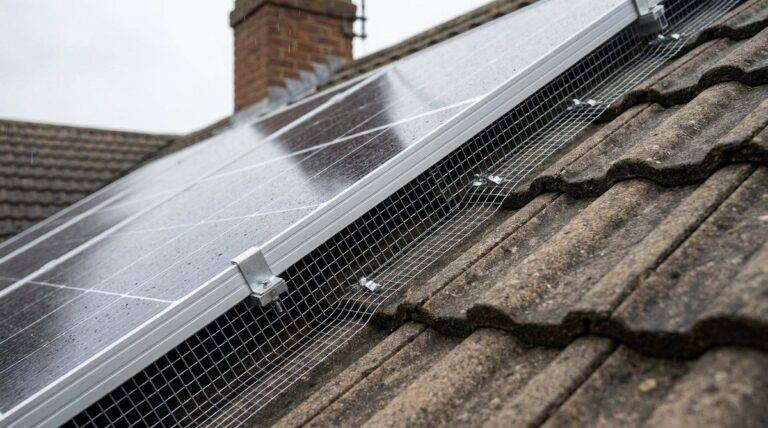
Mounting Solar Panels On A Tiled Roof: All You Need To Know
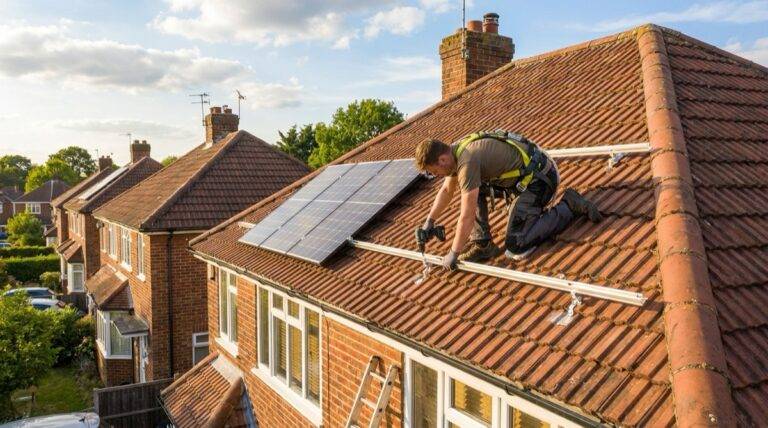
- Roof hooks + rails are the standard UK mounting system for tiled roofs.
- Hook type must match tile profile: plain tile, slate, pantile, and concrete all need different hooks.
- Budget £150–£300 for mounting hardware on a typical 8–12 panel system.
- DIY-friendly: mounting is the most physically demanding part but technically straightforward.

Solar Cable Connectors: Safe PV Wiring Guide
- MC4 connectors are the universal standard for solar panel DC connections.
- Use genuine MC4s — knock-off connectors may not seal properly and can cause arcing or water ingress.
- Solar cable must be UV-rated and sized for the current. 4mm² or 6mm² is standard for residential strings.
- Never mix connector brands on the same circuit. Male/female must be from the same manufacturer.

Overpaneling in the UK: DC/AC Ratio, Benefits, and Limits (2026)
- Overpaneling increases UK annual yield, especially in winter and low-light conditions.
- The key metric is DC/AC ratio — oversize within inverter and DNO limits.
- Done correctly, it improves ROI without automatically requiring a bigger inverter.

UK Solar Panel Grants and Incentives 2026: Complete Guide
- Supplier
- Tariff
- Rate (p/kWh)
- Conditions
- Low-interest or zero-interest loans for solar panels and batteries

Flat vs Pitched vs Vertical: How Roof Type Affects Your 10-Year Solar ROI
- Try the solar angle calculator to estimate your annual yield based on your roof angle and direction.
- Angle and orientation directly affect annual yield, but there is no single “perfect” setup for every roof.
- UK performance is often won in shoulder months, not just peak summer generation.
- Use practical ROI trade-offs when comparing flat, pitched, and vertical mounting options.

Guide to Optimal Solar Panels Wiring for Expanding Strings
- Use the calculator to estimate your numbers based on your setup.
- Series wiring adds voltage — use when panels face the same direction and have similar specs.
- Parallel wiring adds current — use when panels face different directions or have mismatched specs.
- Check your inverter limits: Voc per string must stay below max input voltage, Isc must stay below max input current.
- Mixed panels? Match Imp (current at max power) for series, match Vmp (voltage at max power) for parallel.

Mounting Solar Panels on a Wall: Complete UK Guide (2026)
- Wall-mounted solar is viable where roof space, orientation, or structure is limiting.
- Yield depends heavily on angle, shading, and seasonal sun path — design decisions matter more than aesthetics.
- Use robust mounting and waterproofing standards to avoid long-term maintenance pain.

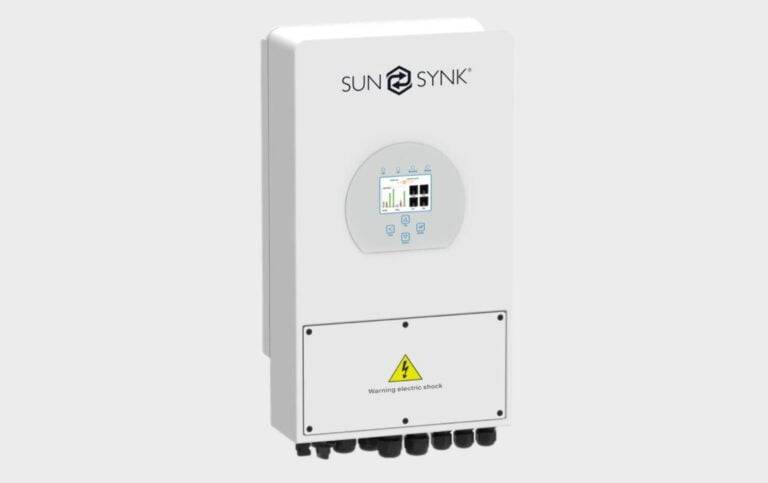
Sunsynk 3.6 ECCO – The Ultimate Home Solar Inverter for DIY
- Best DIY inverter in the UK — hybrid, 3.6kW AC, dual MPPT, battery-ready, G98 compliant. Around £750.
- Owner since May 2023 — running two strings + 16.1kWh Fogstar battery + Solar Assistant automation.
- Generator port trick: connect a second string inverter or microinverters to expand beyond 3.6kW DC input.
- Drawbacks: app data refreshes every 5 min (use Solar Assistant instead), CT clamp inaccurate beyond 15m, SOC reporting quirks with parallel batteries.

Air-to-Air Heat Pumps: Heating and Cooling for the UK

Fix the Weird Solar Assistant CRC Error on Sunsynk and Deye
- CRC errors on Solar Assistant usually mean the RS485 cable is too long, poorly terminated, or picking up interference.
- Fix: shorten cable, add 120Ω termination resistor, use shielded twisted pair cable.
- Affects Sunsynk and Deye inverters connected via Modbus RS485 to Solar Assistant.

The Little Known Sunsynk and Deye CT Clamp Extension Hack
- Sunsynk CT clamp accuracy drops beyond 15 metres of cable — signal attenuates over distance.
- Budget workaround: extend the cable and calibrate the offset in Solar Assistant config.
- Proper fix: install a dedicated energy meter (e.g., Eastron SDM230) closer to the consumer unit.
- Why it matters: inaccurate CT readings cause the inverter to export when it should not, or import when it has stored energy.

Forecast Solar and Battery Charging. Easy Win at Winter
- Automate battery charging using Solar Assistant, PV forecasts, and overnight tariff rates to maximise winter savings.
- Simplest setup: charge from grid overnight on Octopus Go at 7.5p/kWh, discharge during peak hours.
- Advanced: use Forecast.Solar API + Solar Assistant rules to decide whether to charge from grid or wait for solar.
- Works with Sunsynk and Deye inverters via MQTT control through Solar Assistant.

The DIY Solar Panels System I Would Build in 2026
- This is the exact DIY system I would build in 2026 based on real install experience.
- Component picks are updated for current UK pricing, availability, and performance.
- Includes inverter, panel, battery, and accessories with practical trade-offs.

How to Add More Solar Panels With Microinverters (2026 UK Guide)
- Microinverters are a practical expansion route when your main inverter is already at capacity.
- They solve mixed-orientation and partial-shading problems better than many simple add-on approaches.
- Design for compliance and monitoring from day one to avoid retrofit headaches later.

How to Export DIY Solar Energy with Octopus (No MCS): UK Guide 2026
- Yes, DIY solar export can be approved by Octopus in specific scenarios without MCS.
- This guide shows the exact process, documents, and checks that matter most.
- Done right, export income shortens payback and improves total system returns.

Your Guide to Home Solar Energy: DIY and Professional
Discover Your Guide to Home Solar Energy: Insights, safety tips, and informed decision-making guidance for solar panels, batteries, and grid-tied systems. Dive into the essential knowledge needed to make sound decisions about your home solar energy system. Begin with the basics, where you will quickly grasp the what of home solar systems. Then, explore in-depth articles offering a concise, comprehensive guide […]

Choosing a Solar Inverter: Hybrid vs String vs Microinverter (2026 UK Guide)
- For most UK homes, hybrid inverters are the default winner on flexibility and long-term value.
- String and microinverter setups still make sense for specific roof and budget constraints.
- The right choice depends on expansion plans (battery, extra panels, and export strategy).

Solar Battery Storage UK: Types, Costs, and Sizing Guide (2026)
- Batteries increase solar value materially by shifting cheap or self-generated energy into expensive evening hours.
- DC-coupled systems are usually lower-cost when paired with a hybrid inverter.
- Battery sizing and C-rate matter — undersized systems struggle with real household peak loads.

Solar Panel Essentials: From Sunlight to Power Production
- Solar panels convert sunlight to DC electricity via photovoltaic cells. An inverter converts this to usable AC.
- UK-standard panels: 430–490W, N-type TOPCon or HPBC cells, 22–24.5% efficiency.
- Direction matters: south-facing produces ~978 kWh/kWp/year. East/west produces ~81% of that.
- Panels last 25+ years with minimal degradation. The inverter and battery are replaced first.

Solar Panel Inverter: How It Works, Types, and UK Costs (2026)
- The inverter is the control centre that converts PV output into usable household power.
- Hybrid vs string vs microinverter is a design decision, not just a brand choice.
- Choosing correctly up front avoids expensive rework when adding batteries or expanding later.

How To Upgrade Your Solar from 3.6kW to 5.6kW
- G98 covers up to 3.68kW. Beyond that, you need a G99 application to your DNO.
- G99 is an application, not a notification — expect 30–60 days for approval depending on your DNO region.
- You need a single-line diagram (SLD) showing your full system layout. Templates and examples included.
- DIY systems can apply for G99 — you do not need an MCS installer for the application itself.